
POISONING AND MUAY THAI, A DARK SIDE OF BOXING IN THAILAND!

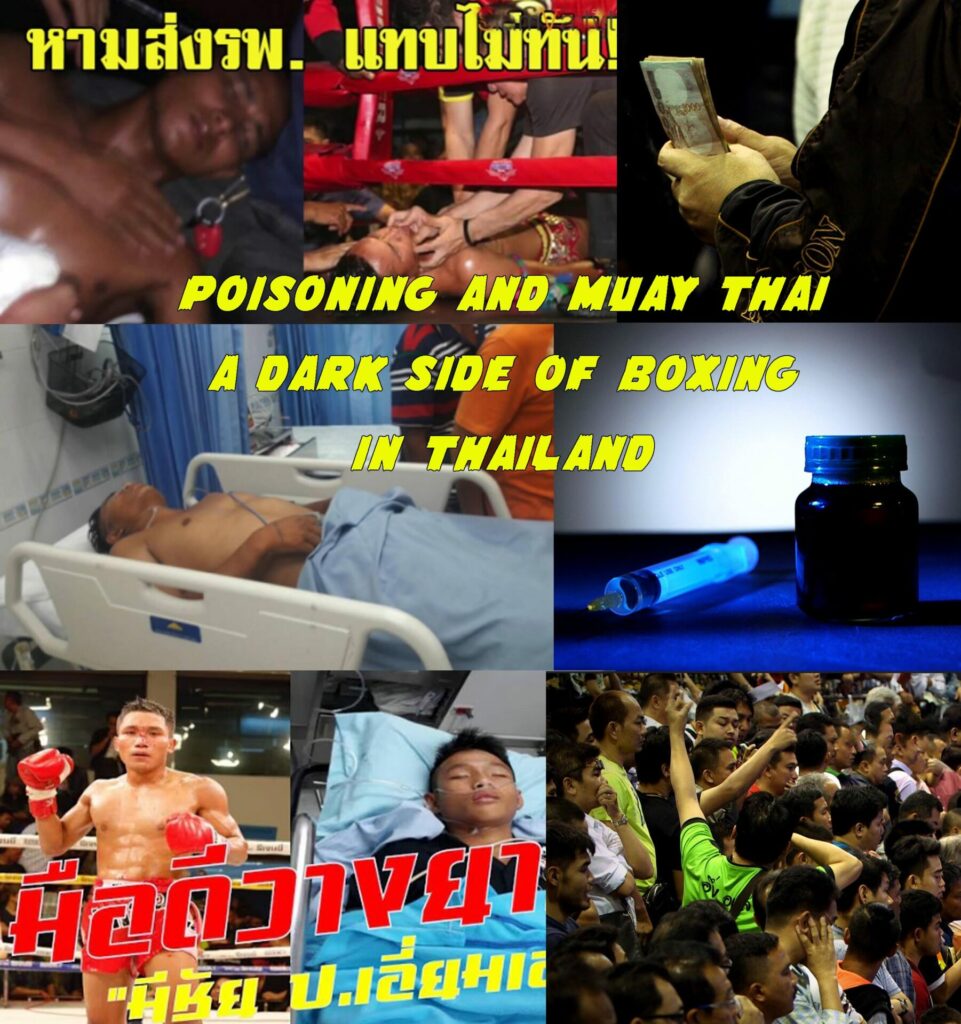
POISONING AND MUAY THAI, A DARK SIDE OF BOXING IN THAILAND!
by Serge TREFEU (2026)
In Thailand, boxing matches are closely linked to the world of betting. The volume of wagers sometimes reaches colossal sums; bets on a single fight can amount to tens, even hundreds of millions of baht.
With such high financial stakes, cheating, match-fixing, and doping are unfortunately inevitable and have long existed in this environment. Betting has always been an integral part of competitive sport, but it is also the primary cause of its excesses.
Today, the ease of communication offered by social media has further amplified the phenomenon, making betting more accessible and causing the amounts wagered to skyrocket.
For many years, it was estimated that nearly 97% of spectators attending fights were there primarily to bet…
Today, the situation has changed. Major stadiums like Rajadamnern and Lumpinee now prohibit bettors from entering boxing matches. However, this measure does not prevent bettors from continuing to place wagers outside the stadiums, on fights taking place within these same venues.
Match-fixing has always existed in the world of boxing in Thailand. This phenomenon has persisted throughout history.
In order to combat this scourge, a Thai boxing law was enacted in 1999. Some unscrupulous bettors do not hesitate to resort to extremely dangerous practices to secure their winnings, even going so far as to poison a boxer to guarantee his defeat and win large sums of money.
Article 61 of the 1999 Boxing Law stipulates that anyone who adulterates food, medicine, or other consumer goods for the purpose of supplying them to a boxer for consumption or use, when such adulteration is likely to harm the boxer’s health or impair their fighting ability, is liable to a sentence of up to five years imprisonment, a maximum fine of 100,000 baht, or both.
Despite this legal framework, the law often proves powerless against those who control the betting industry…
Money can reach anyone; the poisoner could be someone close to the boxer.
Police investigations have revealed that the perpetrators of these poisonings act on the orders of influential bettors in Bangkok and the surrounding area. These individuals belong to three major groups wielding considerable influence over the sports betting industry. The methods employed vary, but the most common involves infiltrating training camps with individuals who befriend boxers and their coaches to gain unrestricted access. They then discreetly mix poison into the boxers’ drinks or food, using these acts as leverage to manipulate the results of upcoming fights.
These practices are entirely motivated by greed. They are in no way driven by hatred or personal animosity toward the boxers. Without the financial stakes, these individuals would not go so far as to endanger an athlete’s life to the point of sending them to the hospital.
The substances used are generally sedatives that cause dizziness, blurred vision, and extreme exhaustion. In some cases, even water is insufficient to alleviate their effects. These drugs pose a major danger to the health of boxers. That is why, today, in all stadiums, officials and coaches must monitor their boxers with constant vigilance…
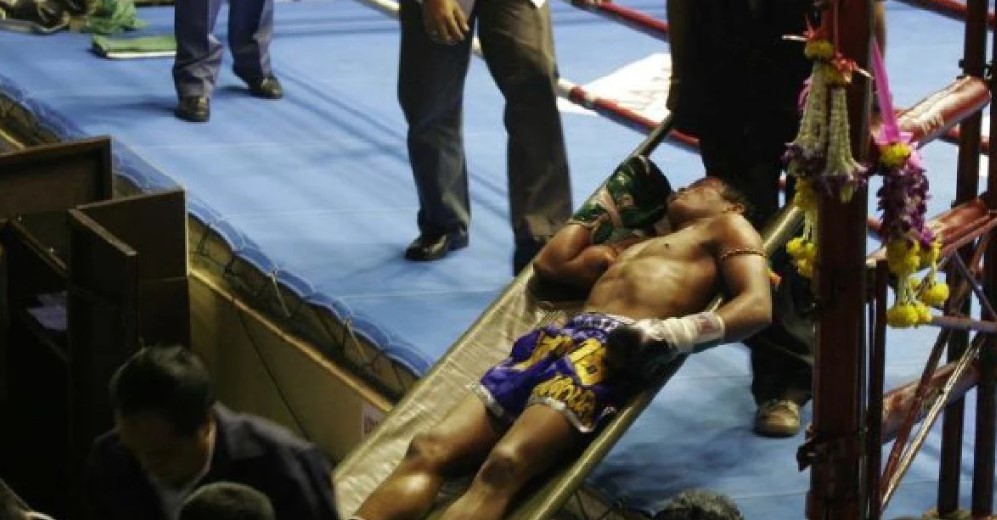
In many cases, the fighter is hospitalized and sometimes has to wait several weeks, or even months, before fully recovering.
Many boxers, as well as training camp managers, are calling on the authorities to quickly apprehend those responsible for these poisonings. These practices seriously damage the reputation of boxing and constitute a major threat, potentially leading to death or permanent disability for boxers.
The methods used to poison boxers are numerous. For example, items might be swapped directly on the boxing ring. A stagehand might leave items unattended while briefly absent, such as to use the restroom, giving malicious individuals the opportunity to replace them with pre-prepared items.
It is also common for bottle swaps to occur in convenience stores. Some people know precisely when the boxer goes there and where he usually buys his drinks. They then place four or five bottles containing doping substances on the shelves, replacing them with other bottles that they pay for on behalf of the boxer.
When the boxer arrives, he usually chooses one of these drinks. After he leaves, the perpetrators return to the store to pay for the remaining bottles, thus preventing anyone else from taking them.
There are also, though less frequently, cases where someone within the training camp itself acts as a mole. This could be, for example, an unscrupulous coach seeking to make more money, even resorting to drugging young boxers.
For these reasons, and as a precaution, many training camps now bring their own drinks, water, electrolyte drinks, and even their own food.
When they buy supplies from convenience stores, they favor different outlets and frequently change their shopping locations. Regularly buying from the same store presents an increased risk of drinks being switched by malicious individuals.
The instigators of these practices often come from the boxing betting world, or are former coaches recruited by bettors. Once the boxer is trapped, the aggressor then bets on his opponent.
The substances commonly used to poison boxers are primarily diuretics, causing frequent urination (complete emptying of the bladder), or drugs that act on the central nervous system, leading to dizziness, drowsiness, and decreased alertness.
To definitively identify the substance involved, a blood test is necessary to detect its presence and determine its nature. The telltale signs of poisoning in a boxer include frequent urination, cramps, intense fatigue, and, in some cases, loss of consciousness, even when no vital organs are directly affected during the fight. Occasionally, some boxers vomit, urinate repeatedly, or lose consciousness even before the fight begins.
Many Thai boxers have unfortunately fallen victim to these dangerous practices during their careers, including some of the greatest champions.
One of the most well-known cases remains that of boxing star Sangmanee Sor Tienpo in 2014.
Then at the peak of his career, at only 17 years old, Sangmanee (Rajadamnern Stadium champion in the 108 lb, 112 lb, 115 lb, and 135 lb weight classes, and named Boxer of the Year in 2012) was rushed to the hospital after collapsing following a points loss to the formidable Thanonchai Thor Sangtiennoi.
The fight took place on December 1, 2014, at Rajadamnern Stadium in Bangkok.
After the match, Sangmanee was in a state of shock requiring immediate medical attention at Vajira Hospital. Doctors quickly detected a sedative-like substance in his urine. According to specialists, a delay of more than 20 minutes in receiving medical attention could have led to fatal kidney failure.
His father testified that after the fight, his son collapsed to the ground, his body rigid. A spoon had to be used to pry his mouth open to prevent him from biting his tongue. Sangmanee also clenched his fingers in his palms, causing bruising. Despite attempts to rouse him by calling his name and opening his eyes, he had to be rushed to the hospital.
Tests conducted by the Bangkok pathology laboratory revealed the presence of three substances in his system, nordiazepam, temazepam, and oxazepam. These are sedatives and sleeping pills that can cause intense fatigue and loss of consciousness, and in high doses, can be fatal.
In the same year, 2014, several other cases of poisoning involving champions were also reported.
On April 20, at the Asawin Dam gala at Imperial Ladprao Boxing Stadium, boxer Khiewpailin Sor Kittichai was drugged and collapsed, unconscious, during his fight against Singphayak Sitraweenoi.
His team immediately attempted to revive him while he was still unconscious.
On June 21, at the Lumpinee TGN Muay Thai gala at Lumpinee Stadium, champion Krataikhao Sit Udomchai was also poisoned before his fight. The young boxer collapsed during the bout in front of the audience.
And on July 17, at Rajadamnern Stadium, during the gala organized by Tor Chaiwat and Sor Jor Wichitpaedriew Promotion, two major boxing stars were also victims of poisoning, Seksan Or Kwanmuang (Rajadamern champion at 135 lbs, Omnoi champion at 140 lbs, TV7 champion at 122 lbs, WBC and IBF world champion, and named Boxer of the Year in 2015) and Phet-Uthong Or Kwanmuang (Rajadamern champion at 135 lbs and named Boxer of the Year in 2016).
The scheduled fights were between Seksan Or Kwanmuang and Superbank Mor Rattanabundit, and Phet-Uthong Or Kwanmuang and Phetthawee Sor Kittichai.
However, during the evening, Seksan and Phet-Uthong, visibly exhausted, proved unable to fight. They underwent medical examinations before returning to the Rajadamnern ring to apologize to the crowd.
In a press interview following the announcement of the fights’ cancellation, an unexpected incident occurred, Phet-Uthong suddenly collapsed, forcing his team and family to carry him inside for first aid before rushing him to the hospital.
The head of Seksan and Phet-Uthong’s camp, promoter Sor Sommai, expressed utter disbelief at such an incident, stating that all necessary precautions had been taken. Energy drinks intended for the boxers were stored in locked containers, and he claimed to have no idea when or under what circumstances the poisoning could have occurred.
Normally, the camp staff meticulously prepares the athletes’ drinks and implements strict measures to prevent any tampering. Before the fight, the two boxers trained at the Sor Jor Wichitpaedriew camp in Chachoengsao province and then traveled to Bangkok early Wednesday morning for the weigh-in, the day of the event.
The energy drinks had been purchased in Chachoengsao and carefully packaged in locked containers to prevent any risk. Despite this, the exact origin of the substances ingested by the two boxers remains unknown, as their symptoms required immediate hospitalization. Following this incident, an official ordered a thorough investigation of the entire team.
Phet-Uthong faints live at the press conference at Rajadamnern Stadium:
https://www.youtube.com/watch?v=Sp6EHLgS0ic&list=PLhDQDkbJ5_Gnh3sNwX2vTBWLY7S1eP9Xh
Other prominent figures in the ring have also fallen victim to this sinister practice, including the legendary champion Kem Sitsongpeenong (Rajadamnern champion at 130 lbs, Thai champion at 122 lbs and 154 lbs, WMC, WBC, and MTA world champion, and Thai Fight tournament champion) and the iconic transgender boxer Nong Rose Banjaroensuk (ThairathTV stadium champion).
While training at Sor Ploenchit’s camp, where he was mentored, Kem Sitsongpeenong was poisoned during a fight where he was the heavy favorite.
After taking a single sip of water from a glass given to him by someone close to the event organizer, he began the fight, quickly sensing that something was wrong. By the third round, he was completely exhausted and had to withdraw from the match.
After the fight, Kem was taken to the hospital, where tests revealed the presence of a substance called “yaagomphasat,” a powerful sedative. The person who had given him the glass of water had disappeared before the fight was over and was never found…
As for Nong Rose Banjaroensuk, she was poisoned during a fight in Nakhon Ratchasima province, where she was the overwhelming favorite.
Her driver, who was taking her to the regional stadium, offered her a drink just before their arrival. Without suspecting anything, she drank it.
The effects of the poison became apparent as early as the second round, by the third round, she could no longer lift her legs and, completely exhausted, lost the match by technical knockout.
Immediately taken to the hospital, tests confirmed that she had been drugged. The driver was found some time later and severely punished!
Unfortunately, this type of practice remains common in Thailand today.
In June 2025, champion Nungubon Teedet 99 had to withdraw from a fight for the vacant Omnoi Stadium 135 lbs title against Buakheaw Phuket Fight Club, a match scheduled at Omnoi Stadium.
Nungubon was exhibiting typical symptoms of poisoning, he was urinating nearly twenty times and was exhausted, which forced him to withdraw before the fight. His training camp partner, Saengthienjiw Teedet 99, replaced him and ultimately won the title.
On March 9, 2025, at Omnoi Stadium, Songchat Si-Opal won his fight against Sarunbong Sor Songtham by TKO in the 4th round, after a series of punches and leg kicks that knocked his opponent out.
Sarunbong, completely exhausted by the third round, was severely knocked out. He was taken to the hospital shortly after the fight, and his team claimed he had been drugged…
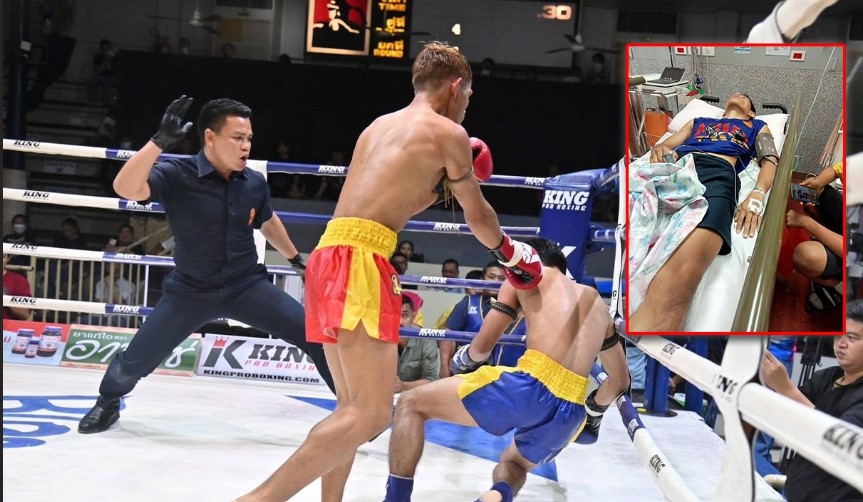
Also in 2025, young Charoenyong Boonlanam of Muay Thai Gym was poisoned before his fight. Reports indicate he exhibited unusual symptoms, including frequent urination and extreme fatigue, even after minimal exertion. The fight ended in a knockout loss in the second round.
Namsuk, one of the trainers, was also hospitalized at the same time after showing signs of disorientation and severe exhaustion. He had likely ingested contaminated water. Both received treatment at the hospital.
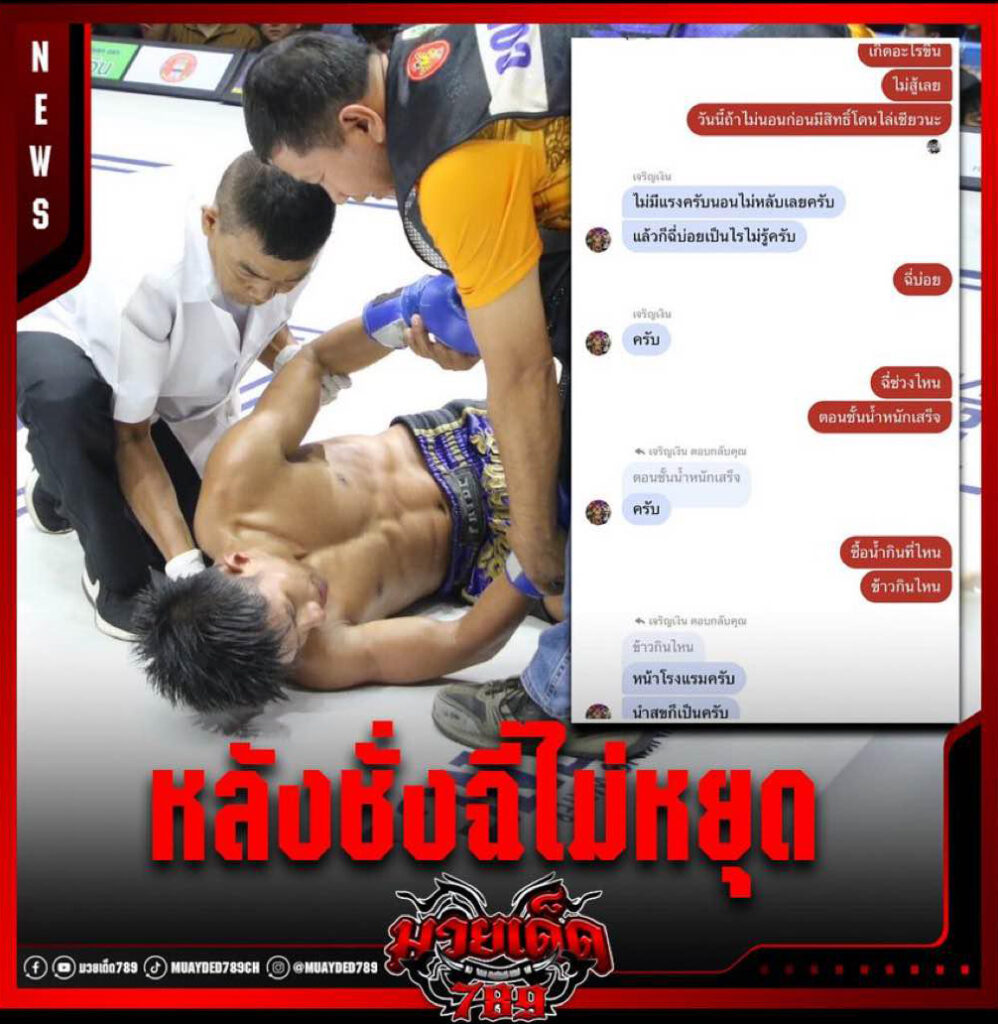
Major stars of the ring have testified to this dangerous phenomenon, confirming that the risk of poisoning is very real in the world of Muay Thai.
Star Jaroenthong Kiatbanchong recounts: “I was lucky to have never encountered this kind of situation, because most of the time we eat at the camp, and it is strictly forbidden for young boxers to eat near the ring.
Even water is prohibited. All food is brought from home or prepared at the camp, for fear of poisoning.
After a fight, we go to eat at a restaurant outside. Even today, the rule remains the same: no boxer dares to consume anything in front of the ring.”
Samart Payakaroon, the Muay Thai icon, says: “Those who drug their opponents have no conscience. In my day, there were few doping cases, only fixed fights.
Today, hiring someone to fix a fight has become too expensive, so some are turning to this method. Exchanging energy drink bottles at convenience stores is often random and doesn’t always target a specific boxer.
My camp provides its own food, water, and energy drinks, or we have our boxers eat at restaurants further away. We strictly forbid our boxers from consuming anything near the ring. As for trainers, I always check their background and integrity. If I detect any risk of cheating or violence, we refuse them the position.”
Foreign fighters are not spared from this cruel phenomenon. Two young prodigies have fallen victim to it, Frenchman Sandro Bosi (TV7 champion at 105 lbs, the first foreigner in history to win this title) and Slovakian Joseph Molnar (220 professional fights in Thailand).
Sandro Bosi, also known as Alex Singmawinn, recounts: “It was a fight at Rajadamnern Stadium against the Thai fighter M16 Banramba.
I lost on points, exhausted, because I had been drugged. During the match, I had no strength, no energy, I was extremely tired. After the fight, the officials asked me to take a drug test and detected a harmful substance in my blood.
This sometimes happens in Thailand; for me, it only happened once, and they never found out who was responsible.
Since then, we’ve been very careful. A trusted trainer always watches over the cooler with the water bottles during my fights, sitting on it to prevent any tampering.”
Joseph Molnar, also known as Joseph Jitmuangnon, says: “They poisoned me because of the big bets placed on me. I was nine years old at the time. Since then, it’s essential to check that nothing is added to my water or food, because my fights attract a huge number of bettors.”
Sources : Thairath Sport, Sanook.com, Vice.com, Interview siamfightmag.com