MUAY THAI AND STITCHES: TESTIMONIALS OF CHAMPIONS

MUAY THAI AND STITCHES:
TESTIMONIALS OF CHAMPIONS
by Serge TREFEU (2026)
In all boxing disciplines, facial cuts are relatively common. Whether in boxing or kickboxing, a fighter can end up with a split eyebrow or a cut cheekbone following a particularly hard punch, or sometimes an accidental head strike.
But in Muay Thai, injuries requiring stitches are even more frequent. Lacerations primarily affect the face, eyebrows, forehead, or cheekbones, and are most often caused by elbow strikes. Muay Thai’s unique elbow techniques are particularly formidable. In the hands of an experienced fighter, the elbow can become a razor-sharp blade when used with precision and power against an opponent.
When a nak muay sustains an open wound or deep laceration during a fight, requiring stitches, the injury must be examined and treated by a doctor or healthcare professional as soon as possible. Depending on the nature and location of the wound, rapid closure may be necessary to minimize the risk of infection and complications.
Elbow strikes and violent impacts frequently cause skin lacerations, particularly in areas of the face where the skin is close to the bone, such as the brow ridges, forehead, and cheekbones. In some cases, the injuries can be multiple and require an impressive number of stitches.
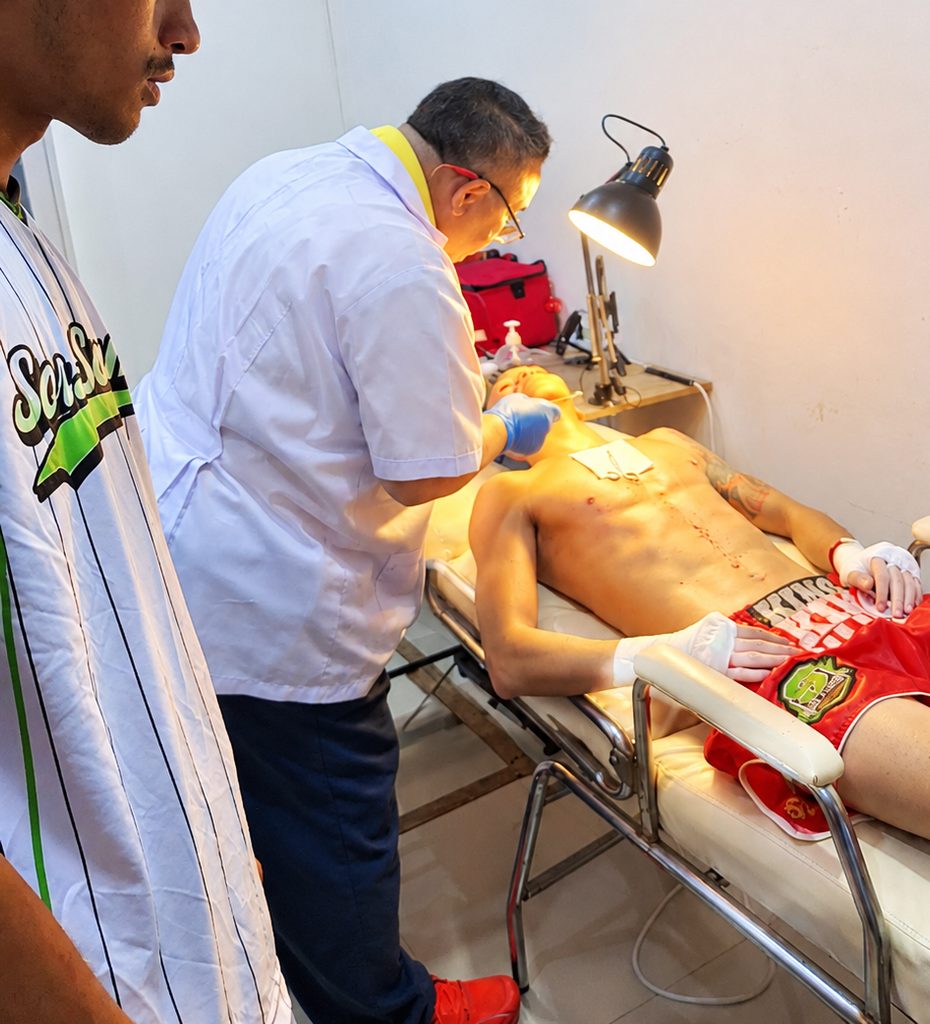
Stitches must be performed by a physician or qualified healthcare professional. This procedure must take place in a suitable medical facility equipped with appropriate lighting, sterile equipment, and the necessary anesthetics and antiseptics.
In boxing competitions, only authorized doctors, including general practitioners or ringside doctors with the required qualifications and authorizations, are permitted to perform these stitches.
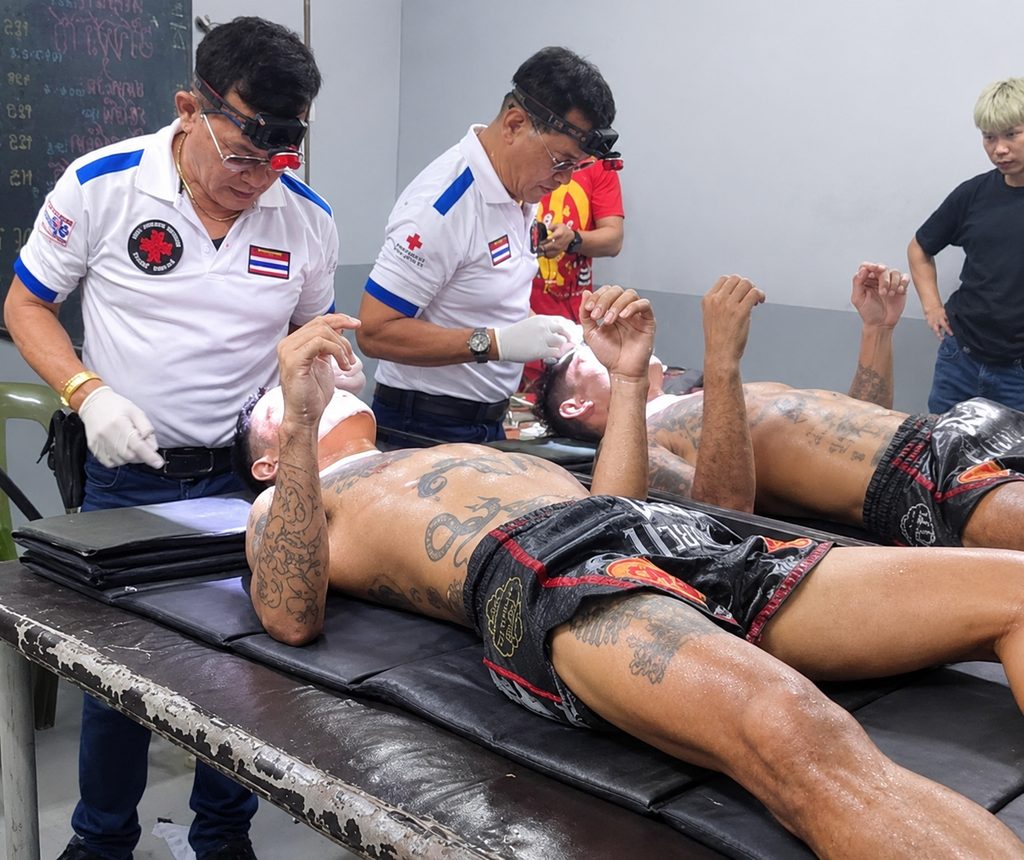
Ringside doctors are responsible for providing medical care and treatment to the fighters. They work in the designated first aid room or infirmary, as well as at ringside, where they conduct initial injury assessments and manage bleeding during bouts.
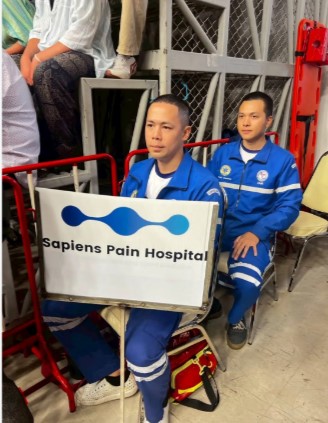
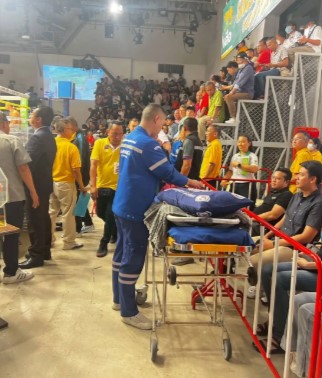
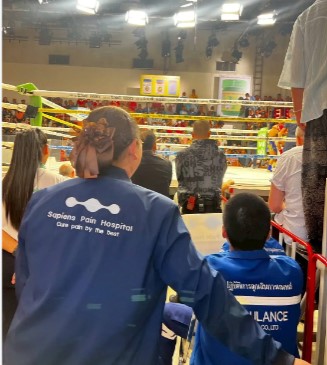
In every boxing stadium in Thailand, a specially designed area serves as a medical center to treat the most serious injuries sustained after particularly violent fights. Injuries caused by elbow strikes are common.
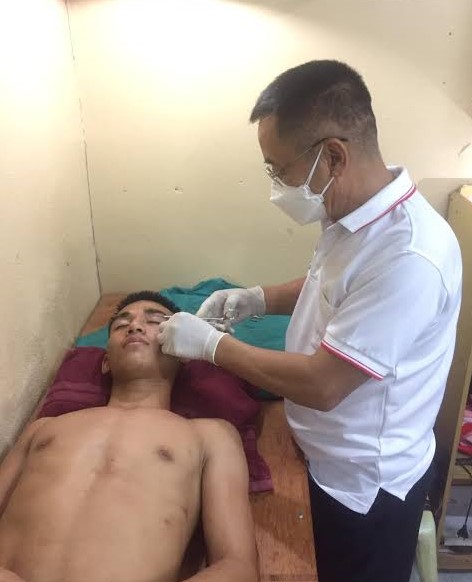
Boxers with deep facial cuts are generally treated immediately by a doctor, who provides the necessary care and, if needed, stitches the wounds on the spot.
However, when an injury is particularly severe, complex, or presents complications requiring more advanced medical attention, the fighter is transferred to a hospital for specialized care.
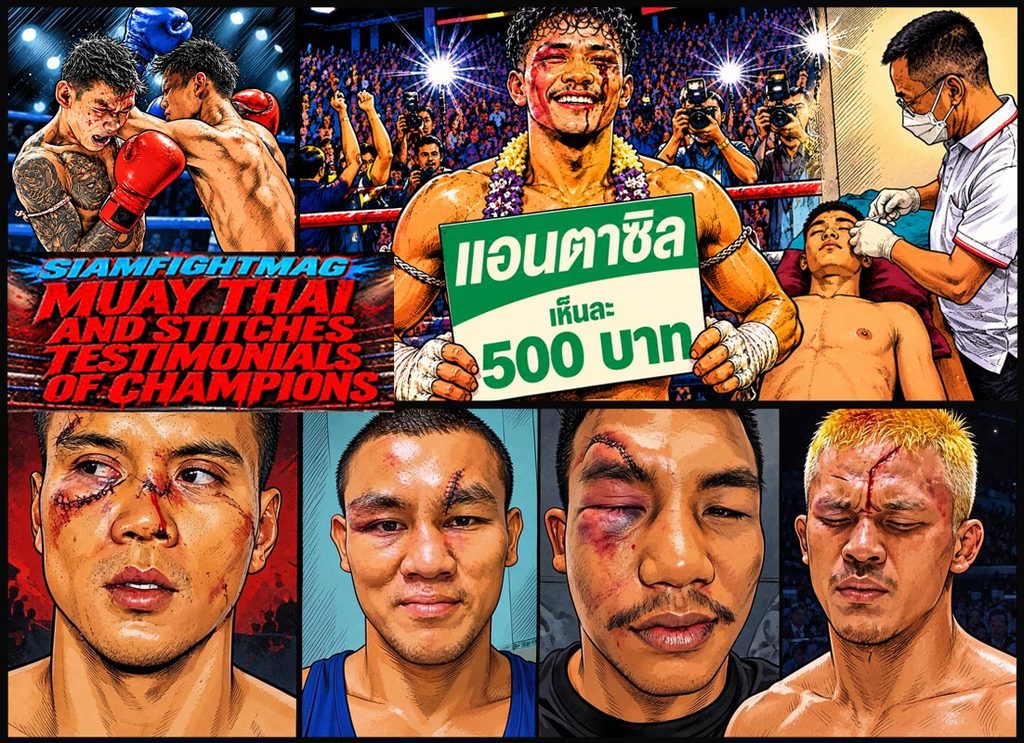
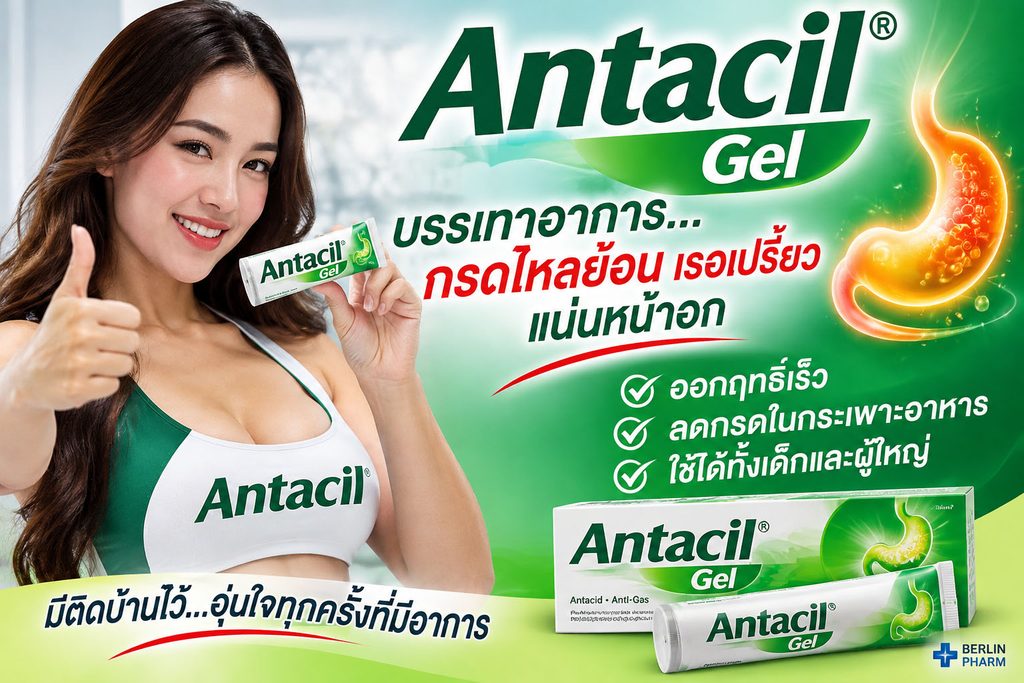
In Thailand, facial injuries from professional Muay Thai fights have been part of the ring’s history for decades. This reality was cleverly transformed into a lucrative advertising opportunity by the pharmaceutical company Antacil (formerly known as Thai Nakorn Patana), which specializes in antacids in tablet and gel form. For nearly 40 years, this brand has sponsored Thai boxing events!
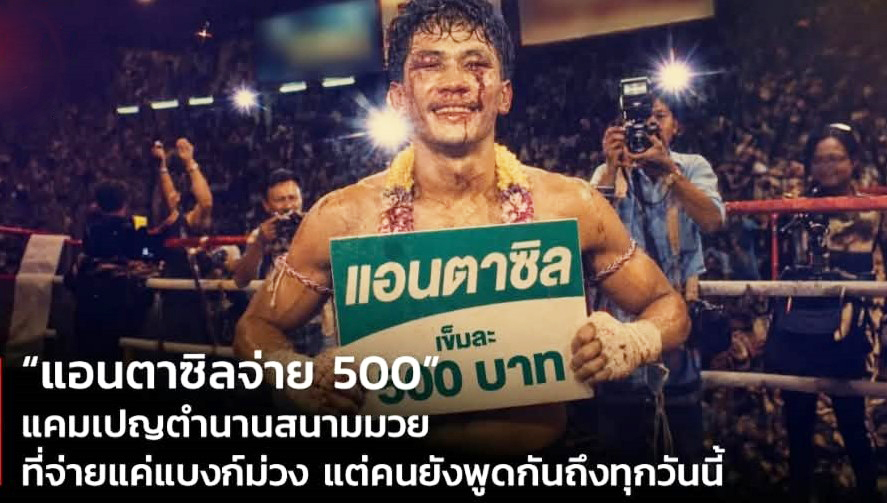
At the time, Mr. Vinai Veerabhuchong, founder of Thai Nakorn Development Co., Ltd., owner of the Antacil brand and a big boxing fan, said: “I feel sorry for the boxers, because injuries are inevitable in this sport. That is why I launched the campaign: “Cut, antacid reimbursed up to 500 baht”.
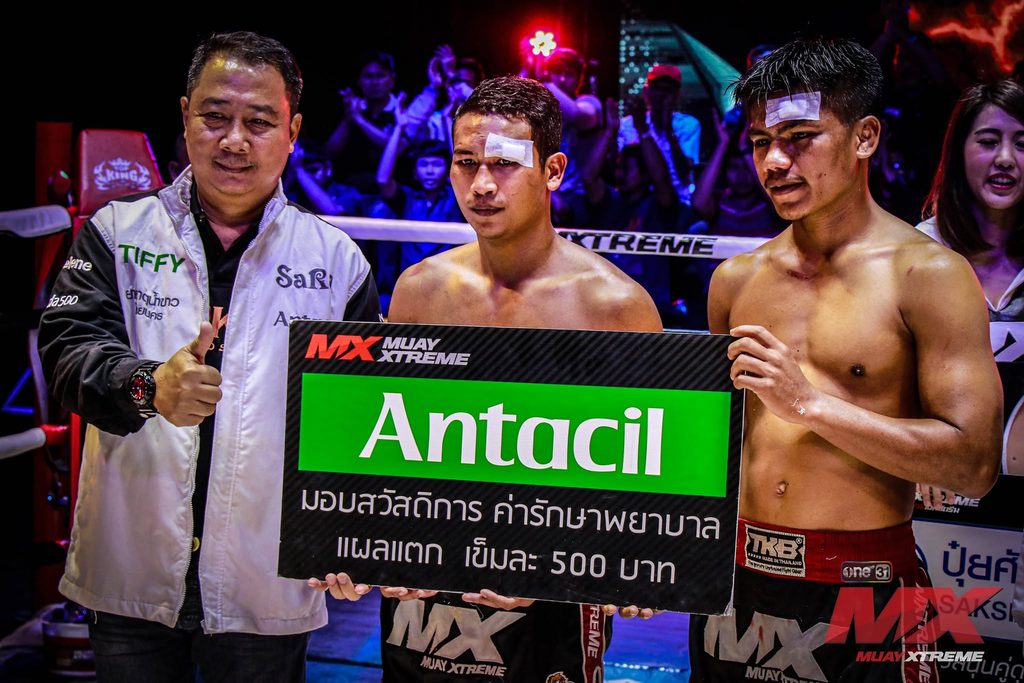
This original initiative was a clever way to sponsor Muay Thai events while ensuring maximum brand visibility through advertising panels installed in the stadiums.
In exchange for their financial support, sponsors benefited from extensive media coverage: their name was announced as a partner of the events, displayed on screens and advertising panels held by the fighters, and commentators frequently mentioned the brand on air.
The brand had also devised prize money for fighters executing certain spectacular Muay Thai techniques. A neck kick, a spinning elbow strike, or a jumping knee strike could earn a prize of 10,000 baht.
One particularly impressive technique, called “Jorakee Fad Hang,” literally “the crocodile that sweeps its tail,” which is a spinning kick, could even earn up to 30,000 baht!
But what truly made this advertising campaign famous was its compensation system for boxers suffering deep facial cuts. Antacil paid them a bonus of 500 baht per stitch used by the doctor to close their wounds. The amount was calculated based on the number of stitches required to close the wound. For example, for five stitches, the injured boxer received 2,500 baht!
And even today, this reward system still exists in many stadiums in Thailand.
Antacil’s campaign perfectly understood how to capitalize on the dramatic intensity of the fights. When a bout became particularly violent, when a fighter dominated their opponent, or when a spectacular cut occurred, the brand benefited from additional media exposure.
Through repeated exposure and commentary during television broadcasts, this advertising campaign made a profound impression.
Viewers eventually began automatically associating the name Antacil with cuts and injuries suffered by boxers. Over time, the brand name even transcended the realm of Muay Thai competitions to enter the everyday language of Thais.
Even today, when someone gets a head injury or a wound requiring stitches, it’s not uncommon to hear Thais joke, “Antacil will pay 500 baht!”
And if the injury is superficial and doesn’t require stitches, the joke becomes, “Antacil won’t pay for that!”
No one knows exactly how much this advertising campaign has cost the brand over the years. But one thing is certain: Antacil pulled off a brilliant PR coup. Nearly four decades later, its name remains inextricably linked to the world of Muay Thai and its famous facial cuts.
A marketing operation that has, in its own way, become a true legend of the Thai boxing ring!

Throughout their long careers, Thai fighters often have to endure extremely violent blows, sometimes leaving permanent scars on their faces. Elbow strikes, particularly dangerous in Muay Thai, are notably responsible for deep lacerations.
It is rare to see a nak muay complete their entire career without bearing some marks from their numerous fights. Some escape with few scars, while others carry the marks of their battles for life, having suffered numerous cuts requiring stitches.
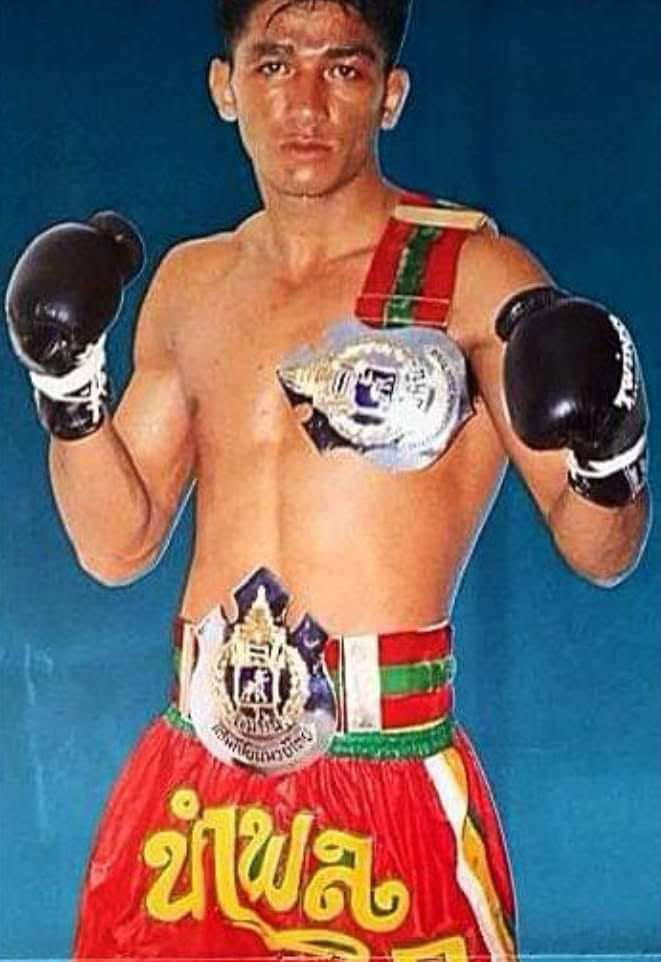
Among the most famous champions to have suffered deep facial scars in the 1980s and 1990s is the legendary Namphon Nongkhee Pahuyuth, Lumpinee champion at 108 and 126 pounds, who passed away in 2016.
Namphon had fought an impressive number of particularly grueling bouts, during which he regularly suffered facial cuts. His injuries had become so iconic that Muay Thai fans nicknamed him “Khun Khao Nay Peuaiye” (The Reconstructed Knee Strike).
Over the course of his career, Namphon reportedly received no fewer than 72 stitches, with additional stitches added following a serious car accident.
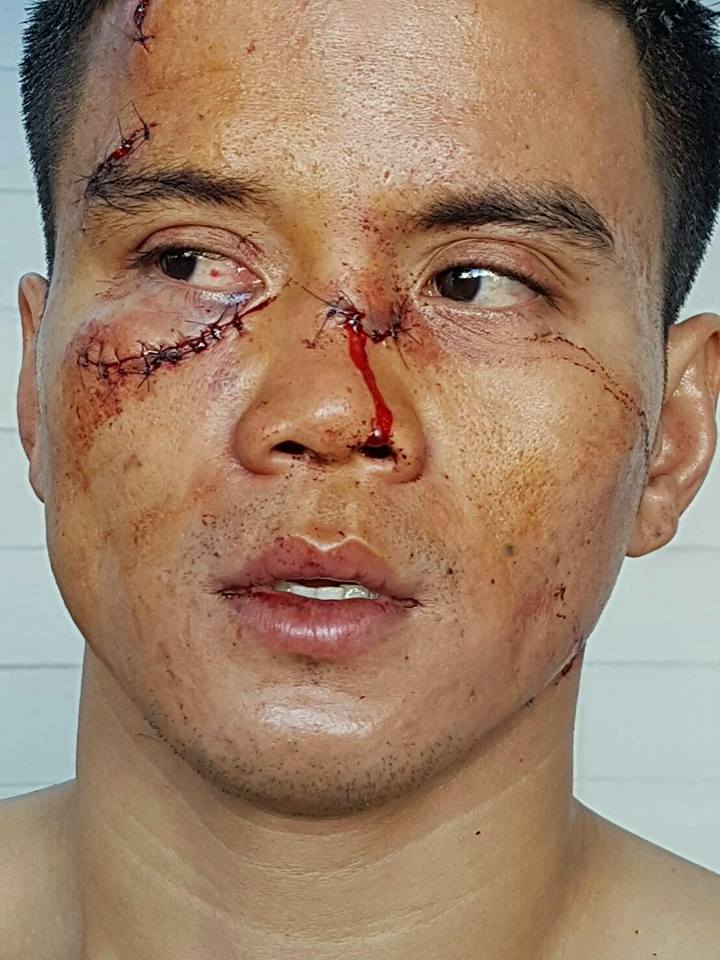
Pongsiri Por Siripong (Lumpinee Champion, TV7 Champion, Omnoi Champion) is undoubtedly one of the fighters of the 2010s who accumulated the most stitches throughout his career.
Pongsiri was a true warrior in the ring, constantly advancing on his opponents, never looking to retreat, even at the cost of taking numerous blows.
Over the years, his face was deeply scarred by the countless battles fought in Thai rings. He reportedly received more than forty stitches on his face and scalp. With each appearance, Pongsiri offered the public spectacular clashes, veritable wars where he displayed remarkable fighting spirit.
He fully lived up to his name, a name borrowed from one of the great champions of the 1990s: Pongsiri Por Ruamrudee.
Pongsiri Por Ruamrudee, a true legend of the rings, nicknamed “Rambo” for her incredible bravery in combat, was renowned for her offensive style and the numerous scars that marked her face.
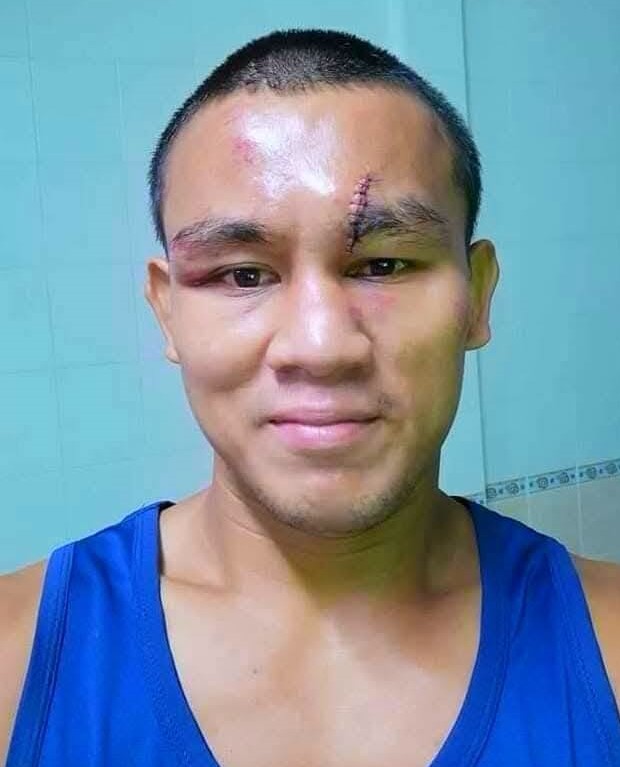
The bull of the ring, the tireless fighter Seksan Or Kwanmuang (Radja champion, world champion), is renowned for his extremely aggressive fighting style, favoring close-quarters combat, relentless attacks, and devastating elbow strikes.
This warrior-like style has earned him numerous cuts, profuse bleeding, and countless stitches.
Considering his fighting style and long career, the Thai champion has accumulated nearly fifty stitches on his face and scalp!
Seksan has suffered many cuts during his most grueling fights. In one of his most brutal battles, he was cut twice by elbow strikes, one requiring 12 stitches, and another cut from an elbow strike required 15 stitches!
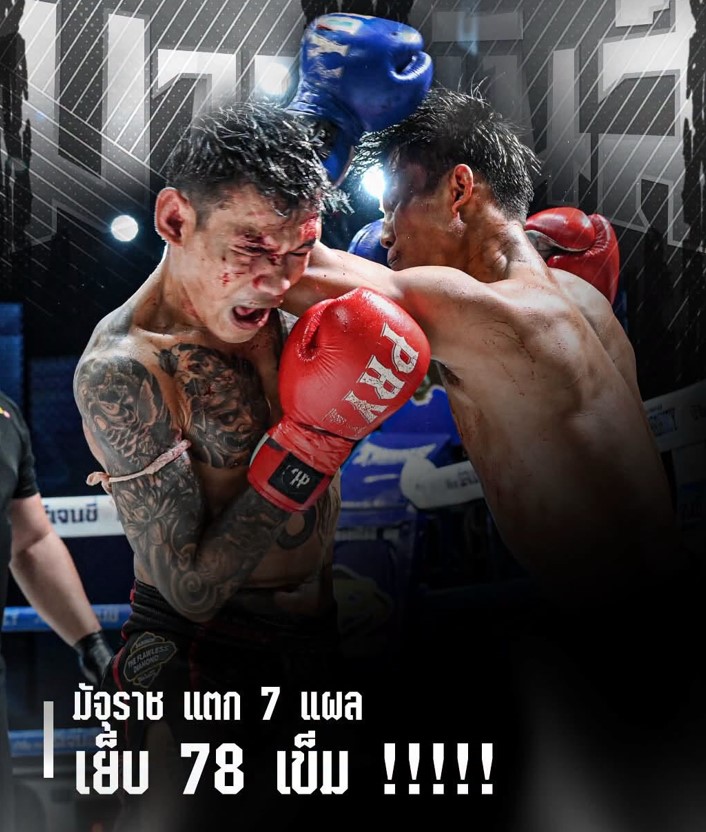
The most recent and particularly spectacular fight in Thailand, marked by exceptionally severe lacerations, took place on October 26, 2026, at Rangsit Stadium, in the suburbs of Bangkok.
That evening, Thai fighter Petchkalasin Sor Chaijaroen won by technical knockout in the 5th round against his compatriot Majjurat Por Pongsawang. During this particularly brutal bout, Majjurat suffered no fewer than seven cuts to his face, inflicted by his opponent’s formidable elbow strikes.
After the fight, the unfortunate fighter required a total of 78 stitches to close his seven wounds!
Once the procedure was complete, the doctor on duty confided that in his 40-year career in boxing, he had never had to stitch a boxer with so many injuries in a single fight.
The toll was particularly impressive: 78 stitches covering seven lacerations located in various parts of his head and face, two cuts on the left side of his forehead, a gash on his left eyebrow, a laceration on his left upper eyelid, a cut on the bridge of his nose, a gash on his right eyebrow, and a laceration on his right cheekbone. Majjurat nevertheless received the famous Antacil advertising bonus: 39,000 baht, or 500 baht multiplied by the 78 stitches.
This substantial compensation symbolically rewards the fighter for the injuries and physical aftereffects he suffered during this extraordinary fight.
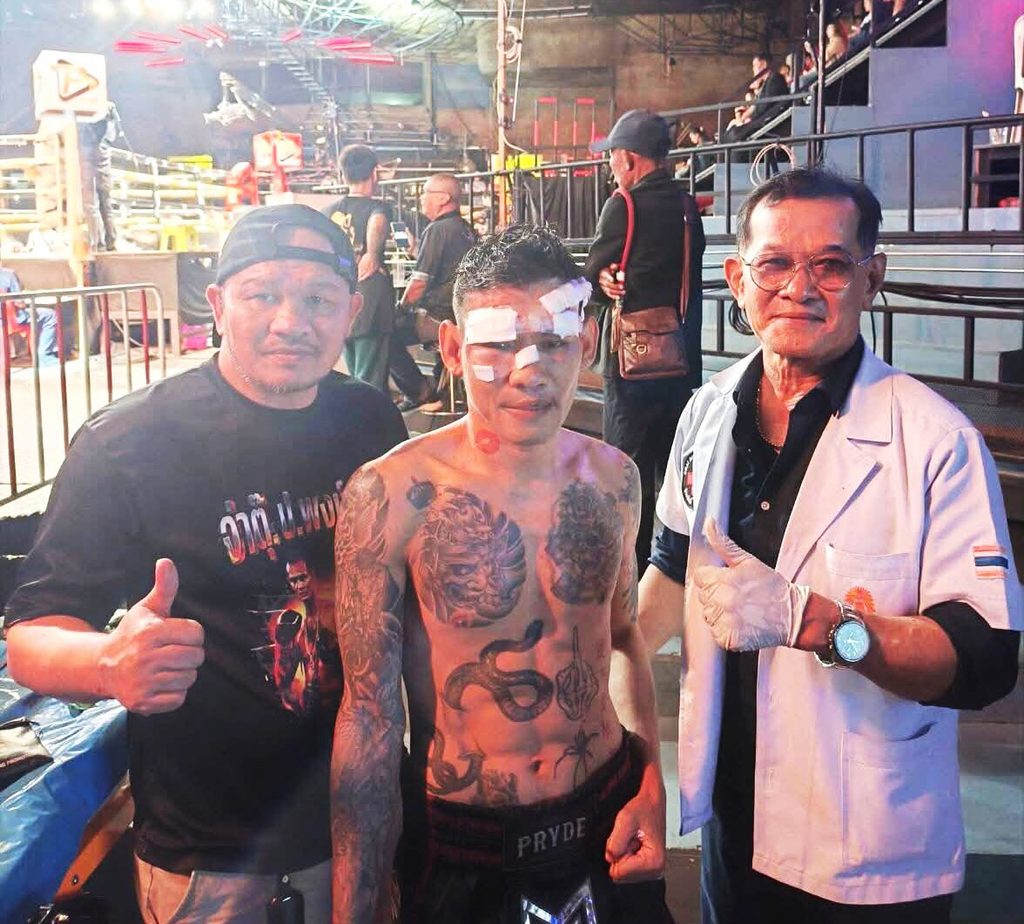
Many great champions have also suffered impressive cuts during their careers. Among the most famous today is undoubtedly the formidable Rodtang Jitmuangnon, a true warrior of the ring, who regularly finishes his fights with a bloodied face.
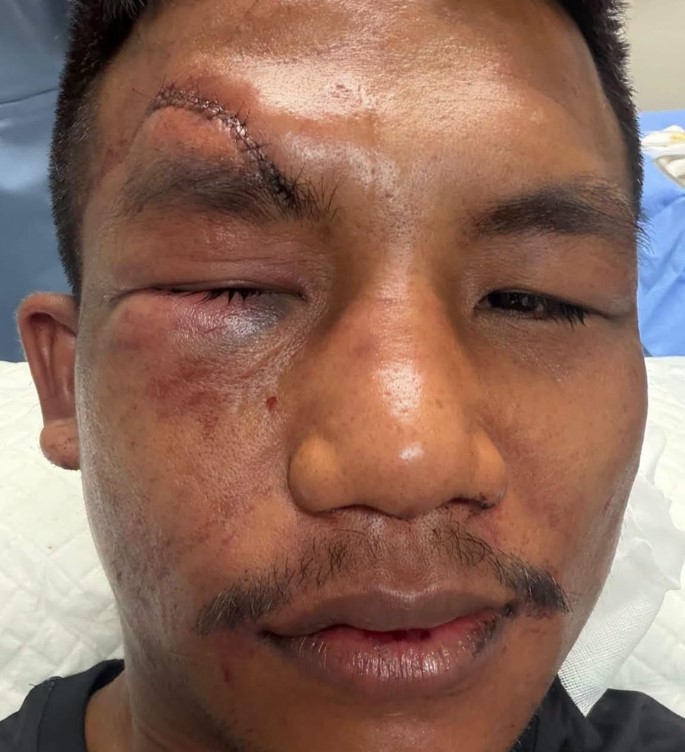
But other renowned champions, like Superlek or Superball, despite being known for their technical mastery and their ability to avoid unnecessary exchanges rather than simply taking the blows, have also suffered serious facial injuries.
In Thailand, few fighters manage to finish a long career without bearing some scars. These indelible marks, etched on their faces, bear witness to the countless battles fought in the ring and the sacrifices made throughout their careers. Scars that will remain for life, like so many reminders of their fierce wars in the Muay Thai ring!
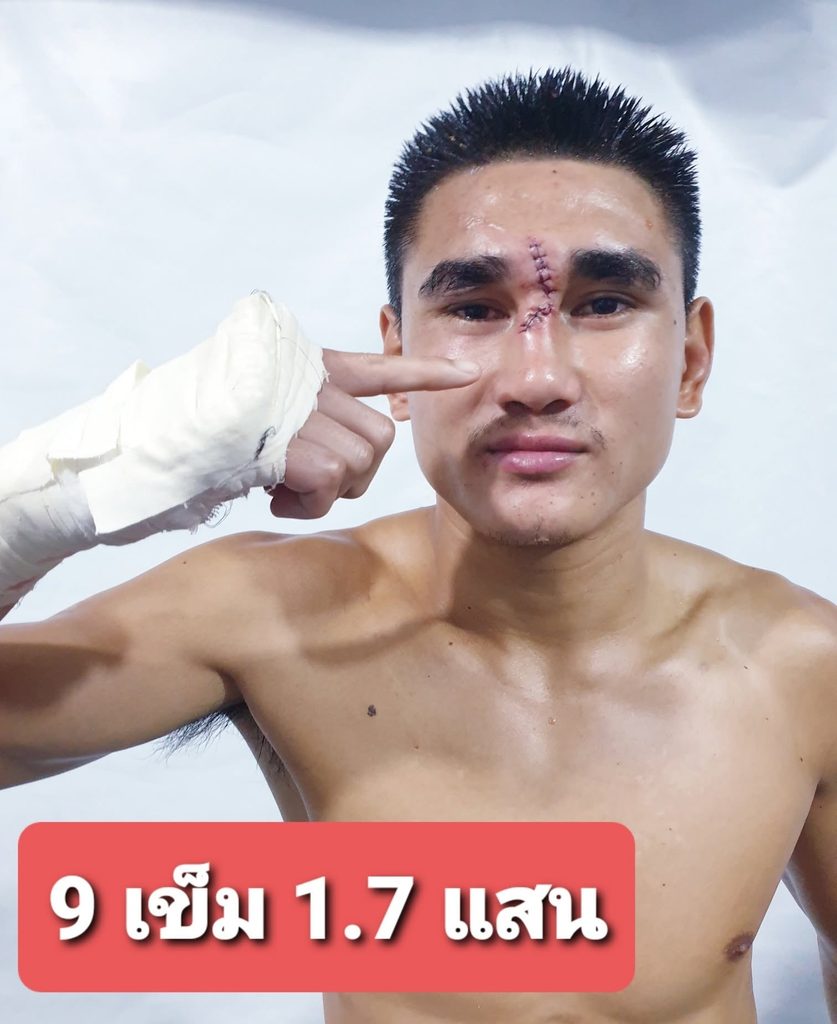
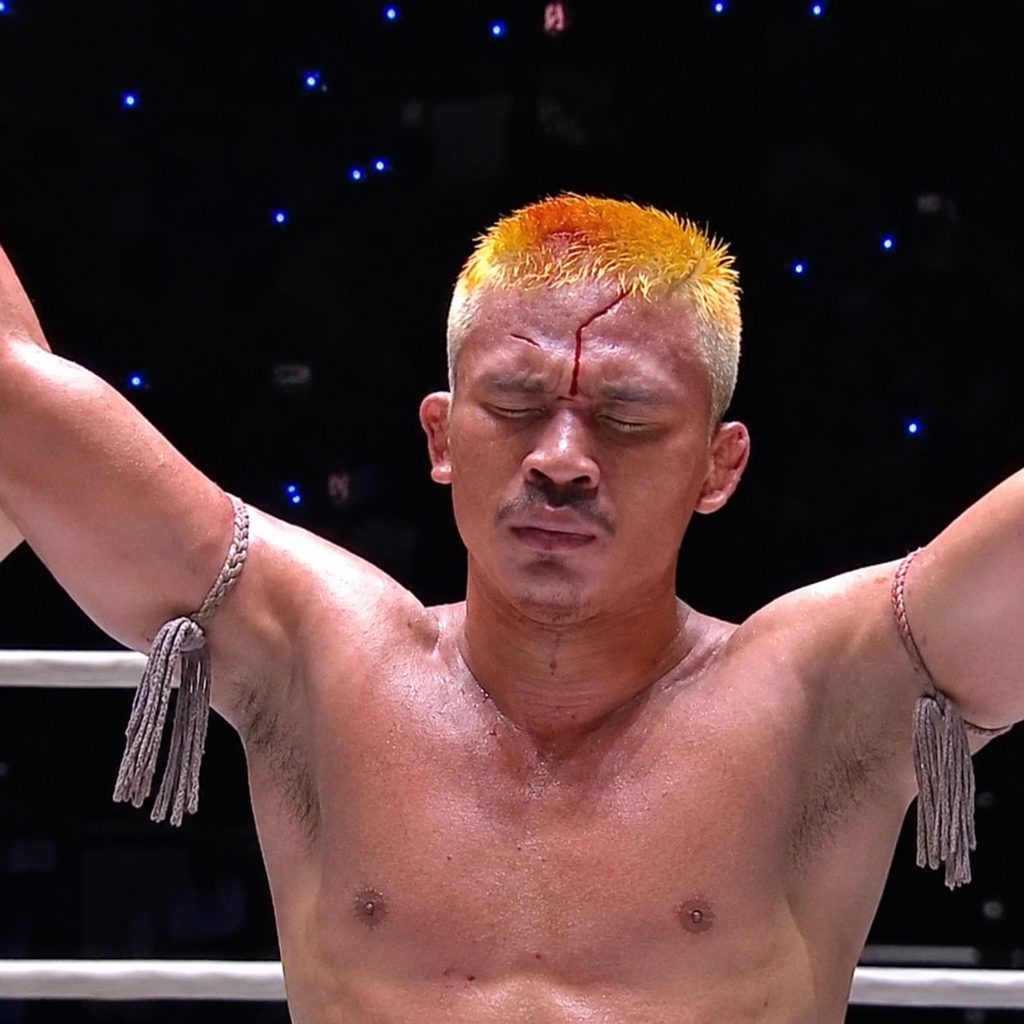
SIAMFIGHTMAG has gathered testimonies from several top foreign champions who have fought extensively in Thailand, or who continue to compete in the country’s Muay Thai rings today.
Through their stories, they reflect on the brutal nature of this discipline at the highest level, share memories of their most grueling fights, and recount the numerous facial cuts they have suffered throughout their careers, often inflicted by the formidable elbow strikes characteristic of Muay Thai!
Testimonials from active champions in the ring:
Isaac Mohamed, also known as Petchnung Petchmuaythai (Radja Champion at 108 lbs, TV7 Champion at 118 lbs). Isaac Mohamed, 20 years old, currently active in Thai boxing, became the first young foreign fighter to win a title in a major Bangkok stadium at just 17 years old, in 2023, for the Rajadamnern Stadium title.
And in 2025, he became the second foreigner in the world to win the TV7 Stadium belt in Bangkok. He was also the first foreigner to receive the “Best Fighter of the Year” award for TV7 Stadium in Bangkok in 2025.
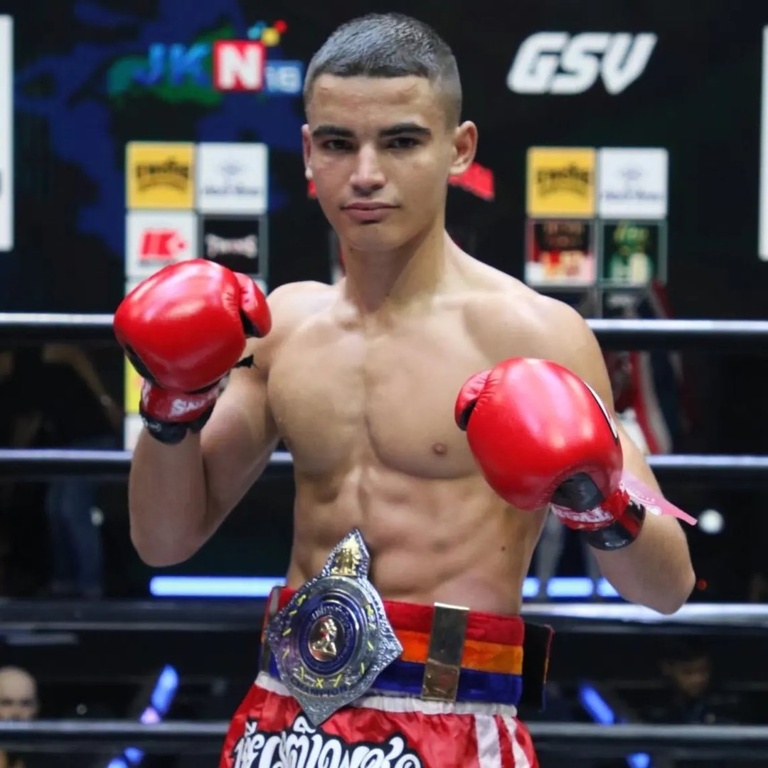
I have 101 stitches in total!
I had the most stitches during the fight against Petchsangwan, 17 in that match against him. But Petchsangwan had reopened a freshly healed wound from my previous fight.
I was only cut by elbow strikes…
Sandro Bosi (TV7 Champion at 105 lbs in 2024). This 17-year-old boxing prodigy is currently one of the best fighters on the Thai circuit.
Sandro Bosi, also known as Alek Singha Mawynn, is the first foreigner in history to have won the TV7 Stadium belt in Bangkok in 2024!
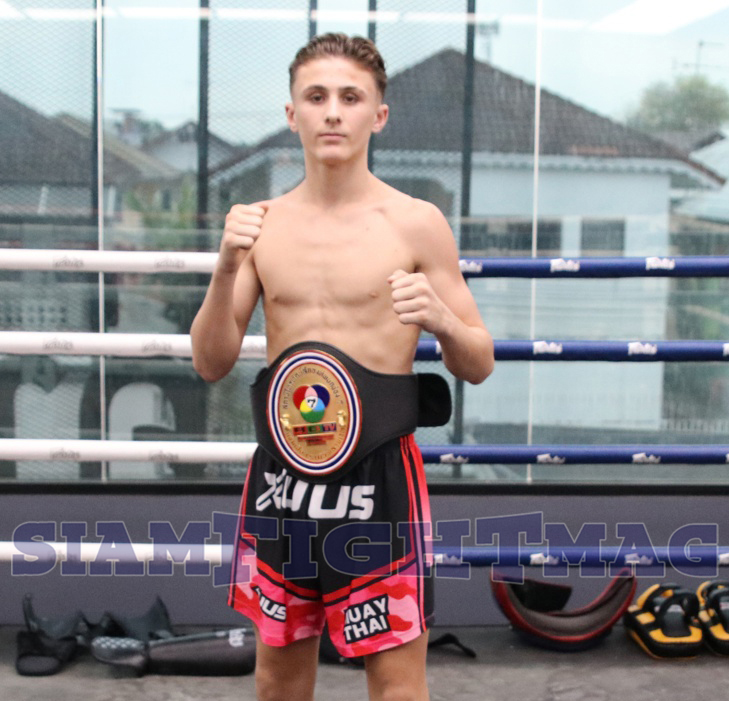
I only had one opening in all my fights, and that was for the match against Yiamyut Por Mongkolin to defend my TV7 Stadium belt at 105 lbs in 2024 (the first foreigner to win this belt in September 2024). I had eight stitches on my scalp from an elbow strike, but you can’t see them with my hair…
Silvio Virgil (Omnoi Stadium Champion). The young Frenchman regularly fights in Bangkok’s major stadiums. Silvio Virgil made Muay Thai history by winning one of Bangkok’s most prestigious stadium belts at the age of just 17. On May 17, 2026, he won the Omnoi Stadium belt in the 126 lbs weight class. He is the first French fighter to win this title!
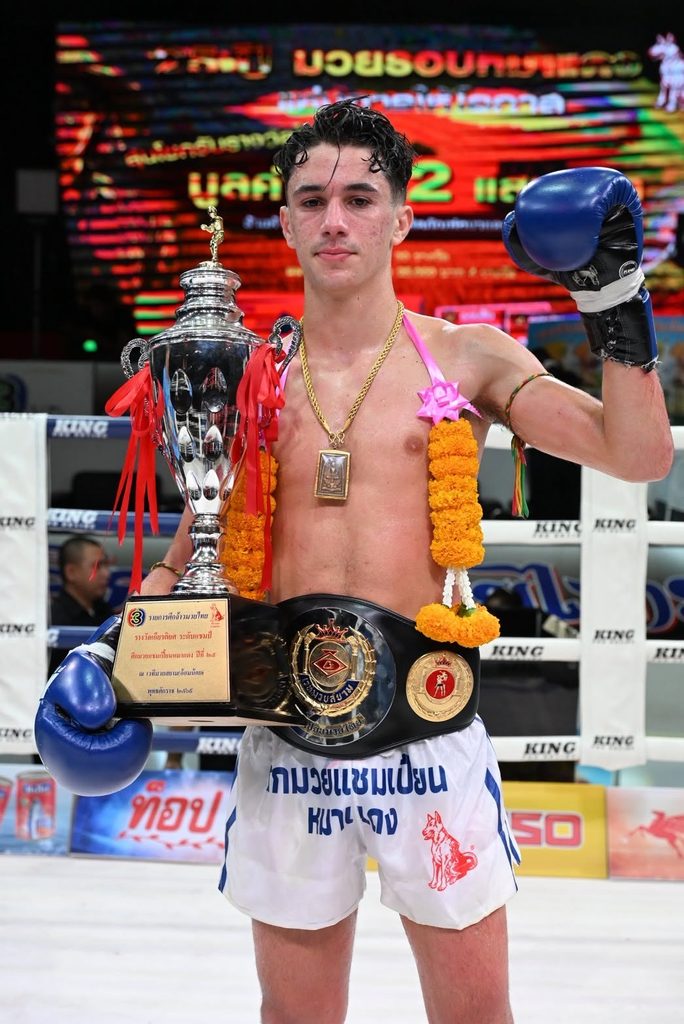
During my career, I’ve accumulated over 20 stitches.
The fight where I suffered the most serious cut was in April 2026 at Rajadamnern Stadium against the Spaniard Paul Pascual. Following an elbow strike, I needed eight stitches… (Silvio Virgil won by points)
Jimmy Vienot (Lumpinee Champion, WBC, WMC, and WPMF World Champion). Jimmy Vienot, nicknamed “The Jaguar,” is still active and now fights in MMA. He is the fifth foreigner in history to have won the famous belt at Bangkok’s Lumpinee Stadium.
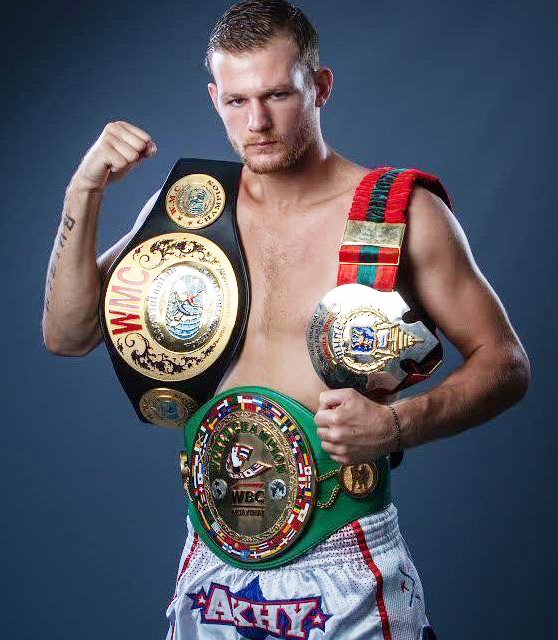
I’ve had a total of 120 stitches during my career.
I think it was during my fight against Nilmungkorn, the cousin of champion Sudsakorn, where I suffered my worst injury from an elbow to the face. In total, I received 15 stitches in that fight! (Jimmy Vienot suffered a severe cut lip in the first round but then knocked out the Thai fighter in the second round at the Max Muay Thai Stadium in Pattaya in 2015).
Liam Harrison (WBC, WMC, WPMF, WAKO World Champion, European Champion). At 41, the English champion is still active in the ring with 120 fights under his belt. He is one of the greatest English champions in the history of Muay Thai.
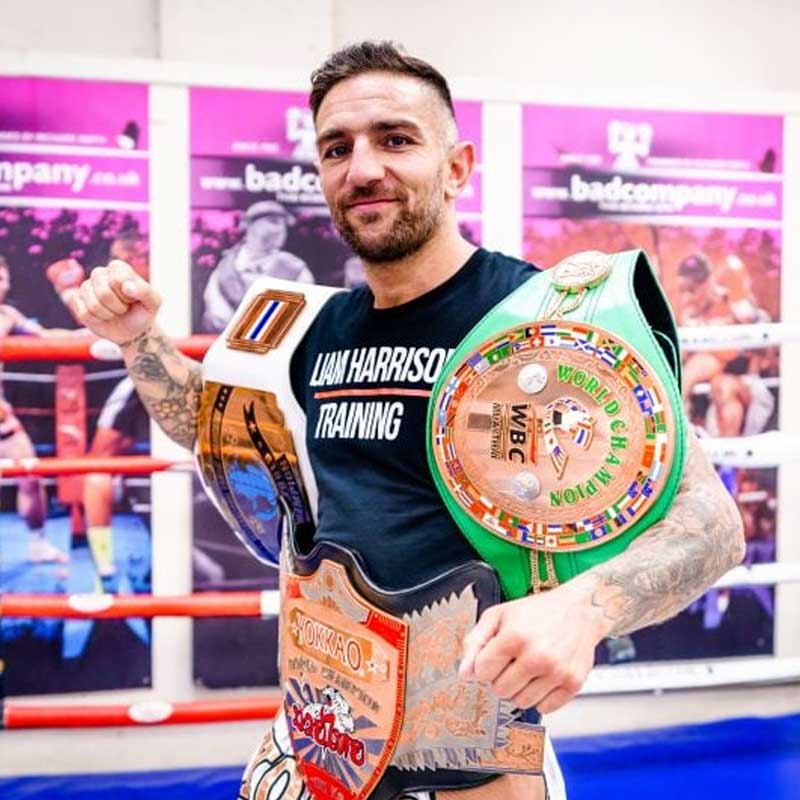
I must have had 150 stitches throughout my career.
My biggest injury, the biggest cut, was during my fight against the Japanese fighter Masaaki Noiri in Japan in 2013. He cut me open with a knee to the face!
Yohan Lidon (Muay Thai World Champion, Kickboxing World Champion, K-1 World Champion). Yohan Lidon is a true legend of combat sports. The tireless “Lumberjack” of the ring is still active at 43.
Having delivered fantastic fights throughout his career, he boasts nearly 200 bouts on his record. With 23 world championship belts across all disciplines, he is one of the most decorated French fighters in history.
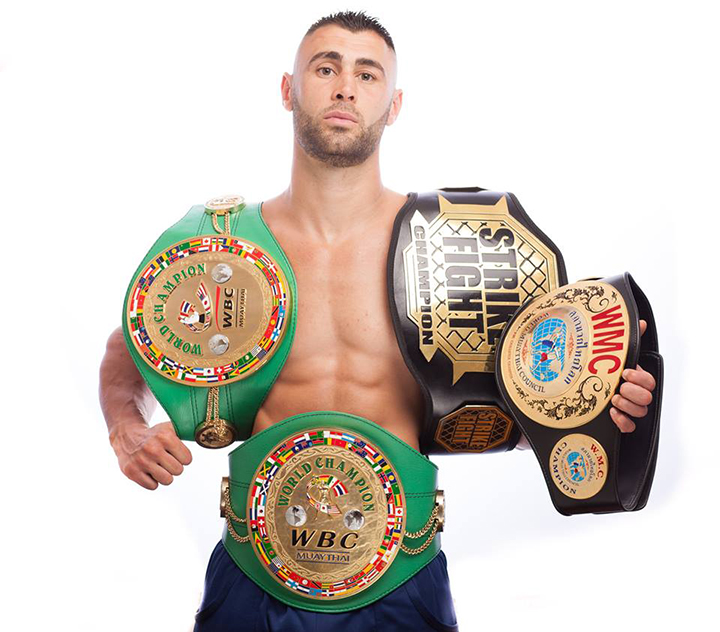
During my career, I didn’t actually need that many stitches. I had 28 in total.
My worst injury dates back to my fight against Lamsongkram Chuwattana. I suffered a deep cut on my forehead that required 12 stitches…
Cindy Silvestre (World Champion). Cindy Silvestre, still active, has nearly 150 fights under her belt, most of them in Thailand, and eight world championship titles (seven in Muay Thai and one in K-1).
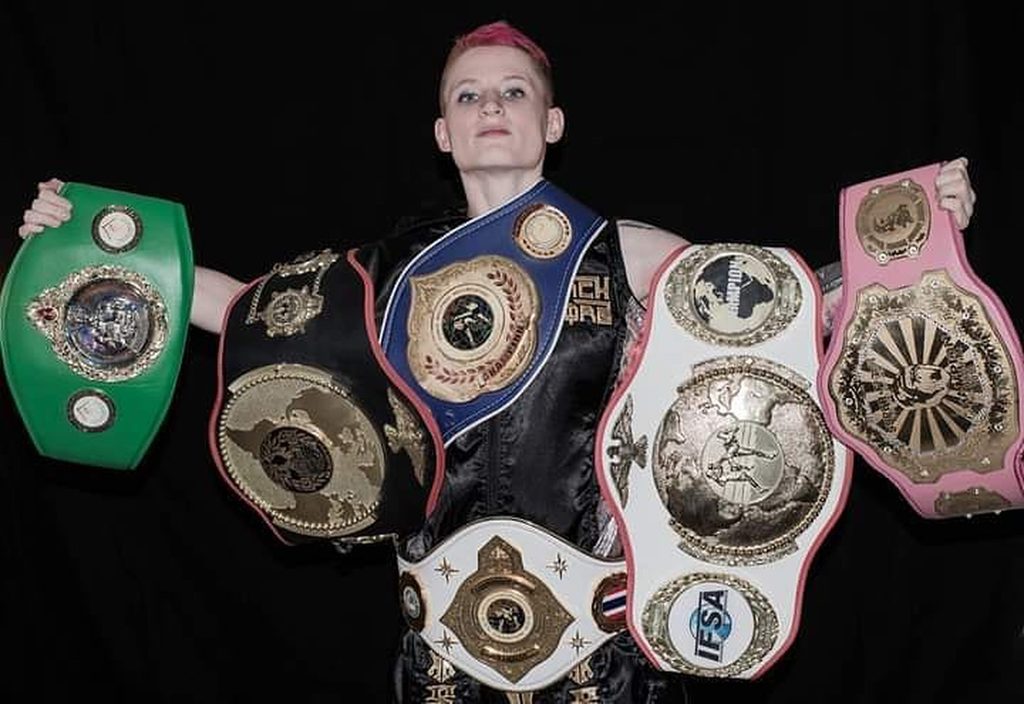
I’ve had quite a few cuts with my Muay Khao style (strong on knee strikes), it increases the risks (Laughs).
I’ve kept count with 38 stitches!
And I’ve avoided a few thanks to glue (Laughs).
My worst cut, as I recall, was against Iman Barlow (World Champion), on the top of my head, requiring 8 stitches.
And the worst cut I’ve seen and inflicted was in Cambodia; the girl’s cheekbone burst open, and she needed a total of 26 stitches!
Sylvie Von Duuglas-Ittu (World Champion). Still active, the phenomenal American Sylvie Von Duuglas-Ittu, nicknamed “Sao Nakleng Khao” (“Miss Gangster Knee”), is the foreign fighter with the most fights in history in Thailand, with a record 302 bouts in Thai rings!
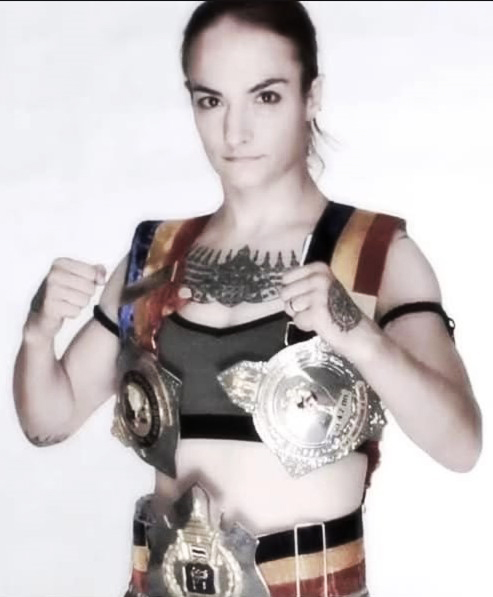
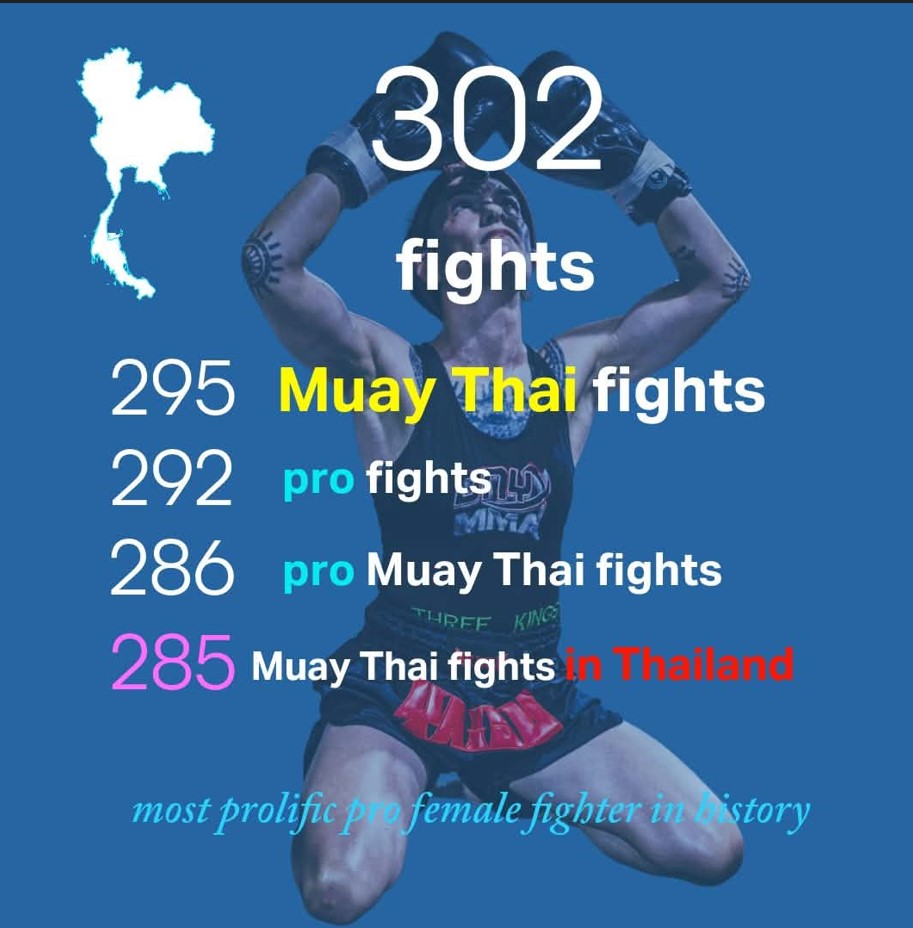
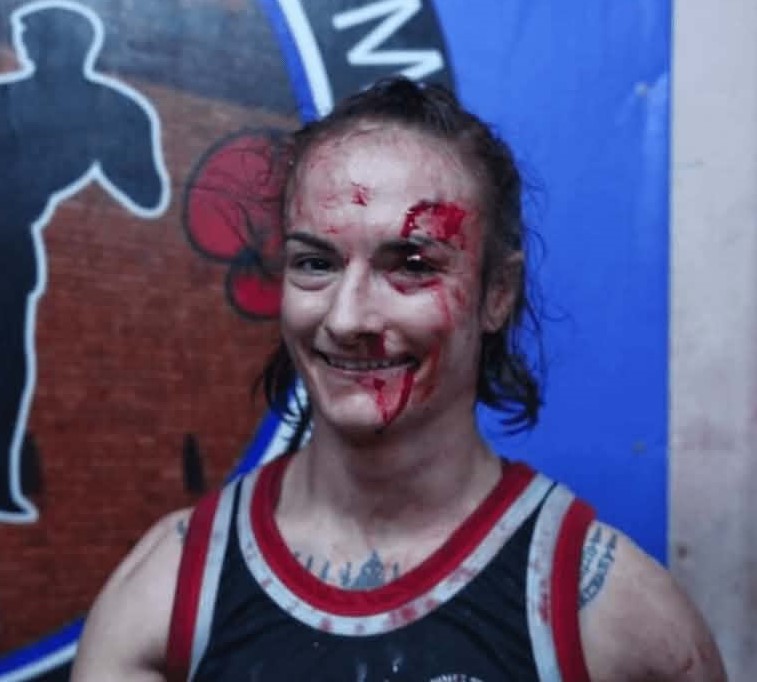
I think I’ve had about 250 stitches, mostly in my head (and a few in my shins)!
The most stitches I received at one time, 28, were against Lommannee Chalamnoi.
But the deepest cut was in a match against Nang Hong Liangprasert (now Nong Fahsai PK Saenchai). A vein burst on my forehead, and I received stitches at the stadium. The doctor then advised me to go to the hospital for deeper stitches. It was very painful, even though the total number of stitches wasn’t high…
Gaëtan Dambo (European Champion, French Champion). Gaëtan Dambo is a tough fighter, a real tank who always puts up a good fight in the ring against the best champions of the moment. He continues his career, notably in Thailand where he fights in the Kard Chuek style (Muay Thai “roped hands” without gloves). He has also ventured into MMA with 3 wins and 2 losses.
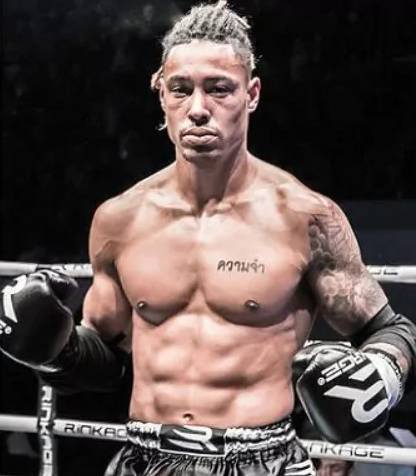
I have roughly 40 to 50 stitches.
These injuries were often from elbow strikes or headbutts I received.
My biggest breakthrough was my match against the Thai fighter Super X at Thai Fight in the Kard Chuek style in 2015.
Testimonials from former champions:
Rafi Bohic (Lumpinee Champion at 147 lbs, WBC and WMC World Champion). The third foreigner in the world to win the Lumpinee Stadium title in Bangkok (2017) and the only one to have successfully defended it six times. Rafi Bohic spent the majority of his career in Thai boxing rings.
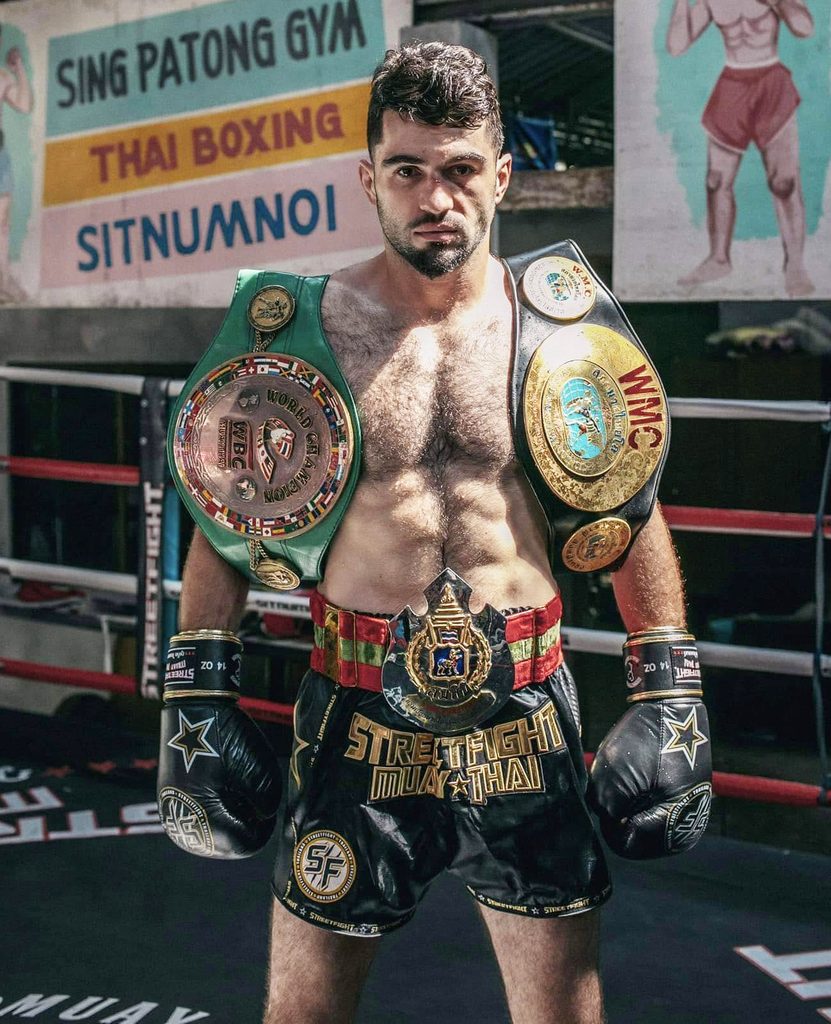
In total, I must have 120-140 stitches on my face and head (scalp, lips, cheekbones, nose, and brow bones), and 20 on my elbow. These cuts were mostly from elbow strikes and sometimes from headbutts; I don’t remember ever being cut by punches.
I’ve had nearly 110 fights, 90 of which were without protective gear (the rest were Class D, Class B and Class A fights in France), mostly in Thailand…
Guillaume Kerner (World Champion, European Champion). Nicknamed “The Blond Angel,” he was one of the first foreigners to challenge and defeat Thai champions in their stadiums. In 1987, Guillaume Kerner won the prestigious title of Boxer of the Year, awarded by Uppercut magazine.
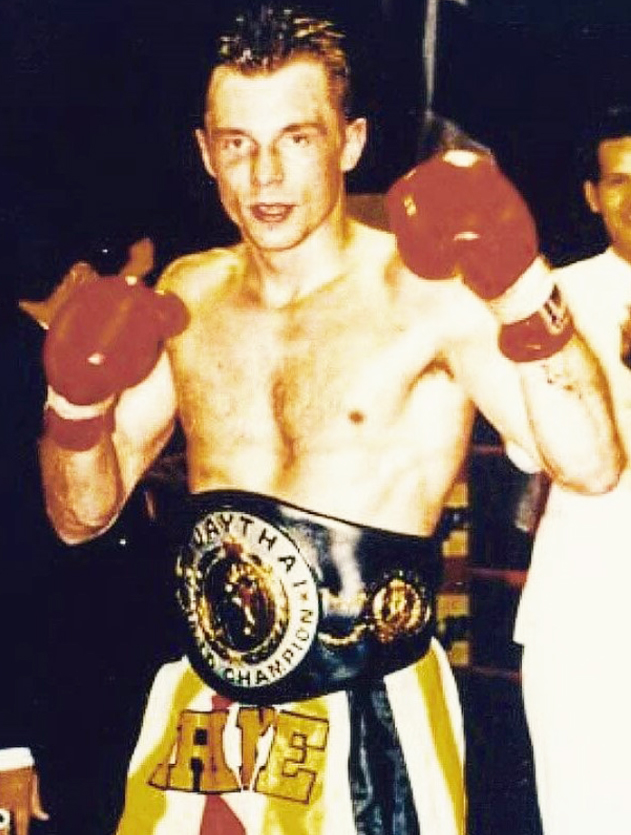
I’ve had two cuts in my career; I lost count of the stitches. The first time I had a cut was during a match against the Omnoi Stadium champion, Kawaow, with a big bet on the fight. I was fighting for the famous Sor Ploenchit camp in Bangkok.
And the second time I had a cut was against the champion Krongsak (six-time World Champion) for the world title in Paris in 1996, a cut above my eye from an elbow strike. (Following this serious cut on Guillaume Kerner, the doctor on duty decided to stop the fight…)
Jean-Charles Skarbowsky (European Champion, No. 1 Rajadamnern Stadium). Nicknamed “Namhon Morana” (The Deadly Scent) by the Thais, Jean-Charles Skarbowsky has fought 97 times, many of the bouts taking place in Thai rings. He was the first Westerner to be ranked number one in Bangkok’s legendary Ratchadamnoen Stadium, in 2003 and 2006.
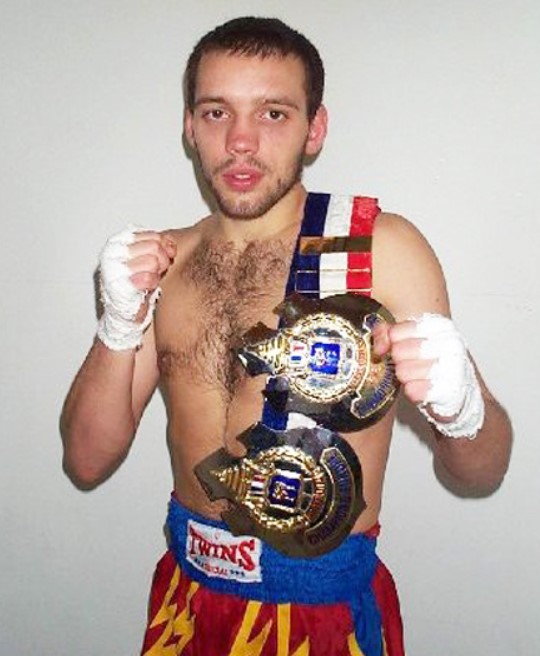
If I count all my stitches, from fights and motorcycle accidents, I must have over 100!
Just from fights, I have about 70. I’ve had 8 stitches above my eyebrows, 11 stitches twice on the top of my head, 3 stitches under my nose, not to mention a few other injuries to my shins.
My biggest cut, however, didn’t happen during a fight in Thailand, but during a match in France, while we were wearing elbow pads.
It was against the champion, Farid Khider. He hit me with a spinning back elbow, but it wasn’t even the impact of his elbow on my skull that caused the injury!
It was his elbow pad that grazed my head and literally tore off part of my scalp, pulling out some hair in the process. It looked like I’d been scalped! I’d never seen anything like it!
Following this impressive injury, I had to get 13 stitches in my scalp…
Fabrice Payen (World Champion, European Champion, No. 3 Rajadamnern Stadium). Nicknamed “The White Tiger” by the Thais, he made history in the sport by becoming the first Westerner ranked in Thailand at the Ratchadamnoen Stadium in Bangkok, ranked No. 3 in 1989. He had 175 Muay Thai fights and became a recognized master of Muay Boran (Traditional Boxing).
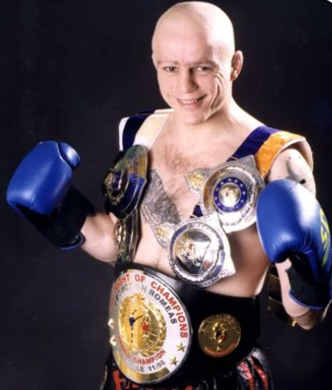
I suffered a nasty cut to my face during my rematch against the Thai fighter Sitprayboun in Marseille city.
Actually, I was the one who opened it first with an elbow strike. I then rushed at him to land a second blow, but he perfectly countered with a sideways elbow strike that split my forehead open. The cut was vertical and caused a lot of bleeding!
Despite the size of the cut, I didn’t end up needing many stitches. The doctors used a special technique called a running stitch, a continuous suture made with a single thread, without having to make a separate stitch each time. There’s simply a starting point at the bottom and a stopping point at the top of the wound. This technique generally results in a less noticeable scar.
Then, in Bangkok in 1989, during a fight at Rajadamnern Stadium for third place in the stadium rankings, I suffered a very serious mouth injury.
At that time, mouthguards weren’t mandatory, and boxers didn’t always wear them. The Thai fighter elbowed me right in the mouth, and my teeth literally went right through my lips. It was terrifying!
After the fight, I went to the hospital myself, accompanied by a tuk-tuk driver. On the way, we saw a man lying motionless on the road in the rain. Motorists were simply trying to avoid running him over. The tuk-tuk driver and I then started directing traffic to prevent him from being hit.
The police finally arrived. The officers retrieved the man who was lying on the road and placed him in their car without any real care, like a common sack of potatoes!
Meanwhile, I was still there, with my mouth badly injured. That’s when a man driving a beautiful car, a sort of Cadillac, offered to take me to the hospital quickly. I was finally able to get treatment and receive the necessary care for my mouth injury.
But my worst injury in a fight was to my shin, in 1995. I was facing an opponent and I landed a middle kick, but my shin slammed into his elbow. I literally shattered my shin in the second round!
Yet I continued the fight to the end with my shin bleeding profusely. There was blood everywhere in the ring, so much so that even the judges had blood on their shirts!
After the fight, I saw a doctor who frankly didn’t do his job properly. He just applied a few strips (sterile adhesive sutures) without actually treating the wound. I went home, but since the injury continued to bleed heavily, I finally had to go to the hospital. There, the doctors gave me seven deep stitches and eleven more superficial ones.
The problem was that this shin injury reopened several times, every time I had a tough fight with shin strikes. Each time, I had to go back to get stitches…
But in the end, my worst injury wasn’t even caused by a fight. It happened in a car accident where I rolled several times. My head hit the window hard, and it shattered. The result: 40 stitches on the left side of my skull! I looked like a scary face, like the Elephant Man! (Laughs)
Jo Prestia (World Champion, European Champion). The first Frenchman to win the Muay Thai world championship title in 1990 and the first foreigner to defeat the formidable Thai fighter Somsong. Currently president of the French Muay Thai Federation (AFMT).
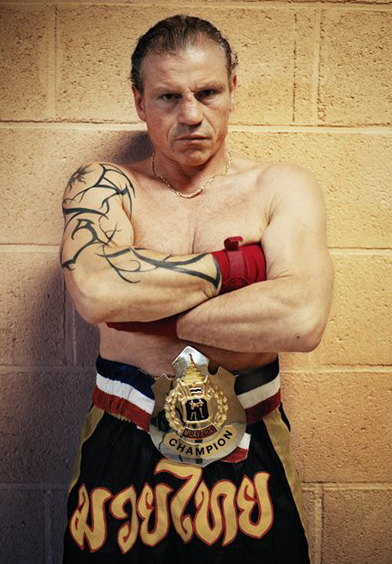
I didn’t need stitches on my skull or face, but I did occasionally have cuts in my eyebrows. Each time, however, it was due to headbutts.
The most spectacular incident was during my first French championship final in 1985 against Mohamed Jami.
He headbutted me, causing a very deep gash; my face was covered in blood. We continued the fight, and in the following round, he headbutted me again, splitting my second eyebrow open. During the one-minute break, my coach put a bandage around my head to keep it in place. The promoter at the time, Roger Paschy, stopped the fight. We weren’t allowed to have bandages on our heads. So, I ripped off my bandage and went right back into the fight. And I won the match and earned my first belt!
Otherwise, I’ve never been cut open by an elbow strike. I didn’t use that technique much, but I made sure not to get hit…
Christian Garros (European Champion). Christian Garros is one of the great French champions who challenged the best Thai fighters of the 1990s, the golden age of Muay Thai in Thailand, in their home stadium in Bangkok.
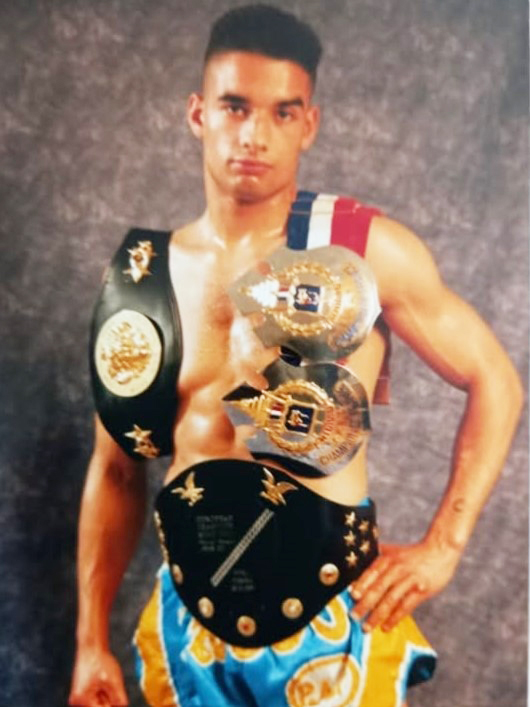
I had a total of 26 stitches: five times three stitches, once four stitches, and once seven stitches, the most severe one I ever had. It was for a match against the Thai fighter Taweesub at the King’s birthday celebration in Bangkok, where I received those seven stitches in the middle of my forehead after taking an elbow strike.
Stephane Nikiema (World Champion, European Champion). Stephane Nikiema is one of the great champions of the golden age of French and Thai Muay Thai. He is certainly one of the French fighters with the longest careers in the ring, with a particularly rich career in Thailand. He faced some of the biggest stars of the era, including Somsong, Changpuek, Krongsak, Nokweed, Sagat, Kriengkrai, Nungtrakarn, and Orono.
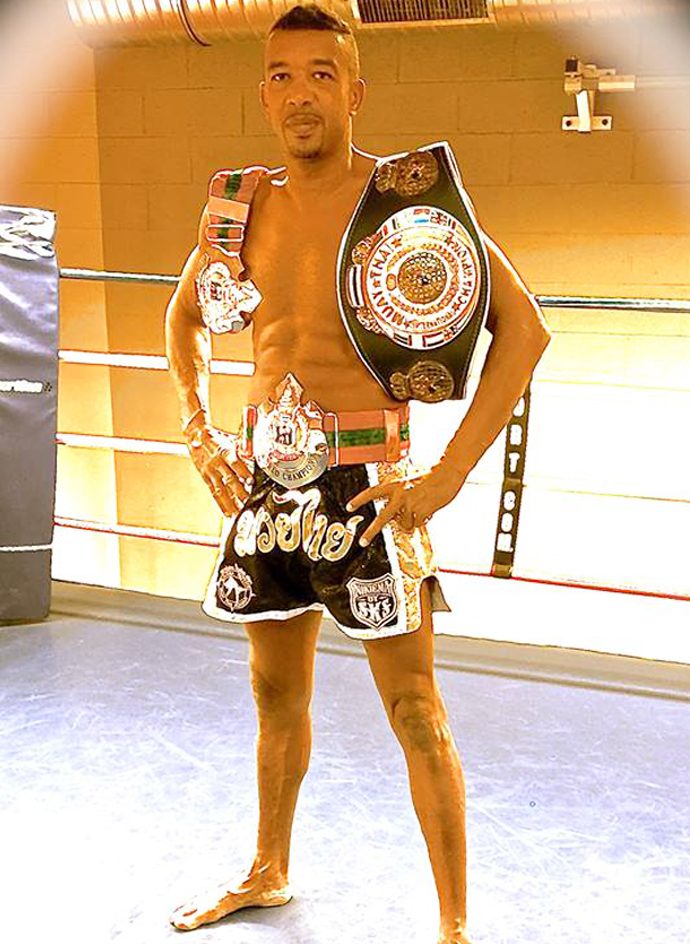
I had 11 stitches in total.
I received three during my fight against Krongsak in Paris.
But my most serious injury occurred against Kriengkrai. I took an elbow to the forehead that opened a deep gash and required eight stitches. That fight also took place in Paris.
I never had any cuts during my fights in Thailand!
(The Muay Thai rivalry between Frenchman Stephane Nikiema and Thai Kriangkrai Sor Vorapin spanned four memorable clashes in the 1990s. Their historic confrontation resulted in a balanced record: 1 win for Stephane Nikiema, 2 wins for Kriangkrai Sor Vorapin and 1 draw)
Christophe Lévèque (Southern Thailand Champion). Christophe Lévèque was the first foreigner to win the famous Southern Thailand championship belt in 1998.
Throughout my entire career in Thailand, as well as abroad, I only had two facial cuts that required stitches, both caused by elbow strikes.
The first was to my eyebrow during my first fight against Nakhonwan Sithisot, who was the Southern Thailand champion at the time. I needed five stitches.
The second time, it was to my upper lip, also from an elbow strike, during an outdoor event in Bangkok, against a Thai fighter whose name I unfortunately can’t recall. I needed three stitches that time. In fact, that lip injury remains my biggest facial cut because it was so deep.
In total, I’ve had eight stitches throughout my entire career. Aside from those two injuries, I’ve never had any other cuts…
Mathias Gallo Cassarino (WMC and WPMF World Champion). The Italian champion is one of the foreign champions with the most professional fights in Thai rings, boasting 95 bouts, many of which took place in Bangkok stadiums. In 2023, he had the honor of competing for the Lumpinee Stadium title in Bangkok but lost to Thai champion Kanongsuek.
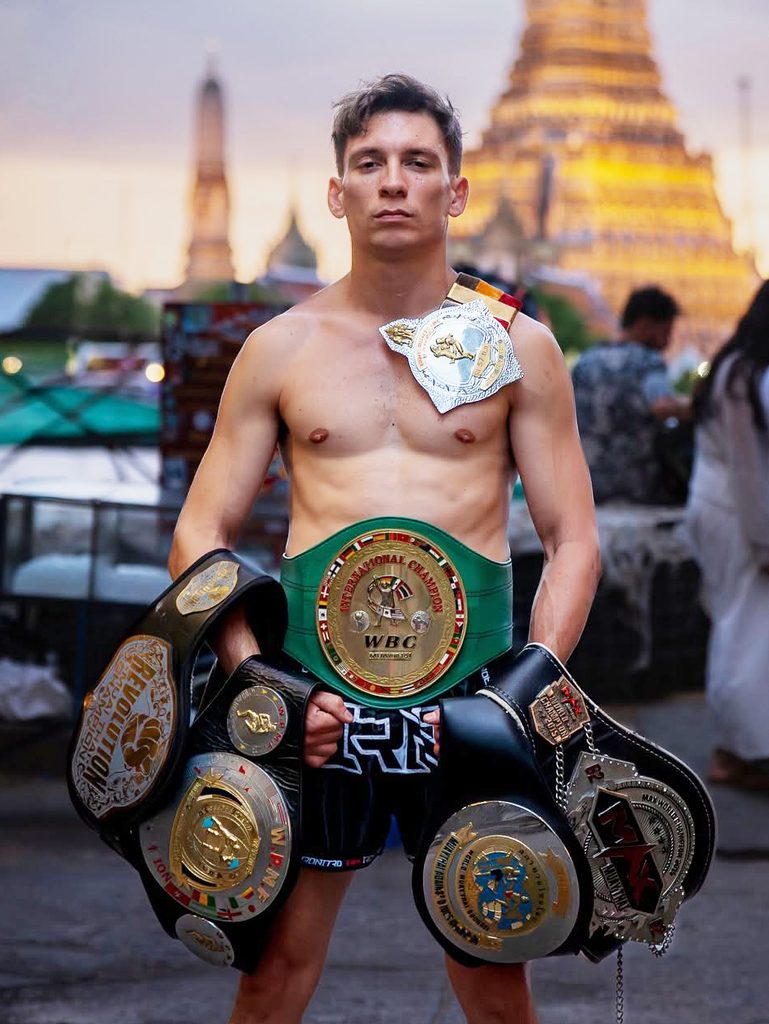
I had a lot of stitches, but honestly, I couldn’t count them for sure, more than a hundred!
The most serious injury was against the Thai Yodtuangtong Petchyindee, during a match for the Toyota Marathon tournament in Khon Kaen, in the northeastern province. It was an elbow to the head…
Khaled Hebieb (World Champion, European Champion). Nicknamed “The Professor,” this great champion, with four world titles and three European titles, was one of the best fighters in France during the 1990s. He faced the biggest names in his sport, such as the Thai terrors Anukun and Saenkeng, and the Dutch star Ramon Dekkers.
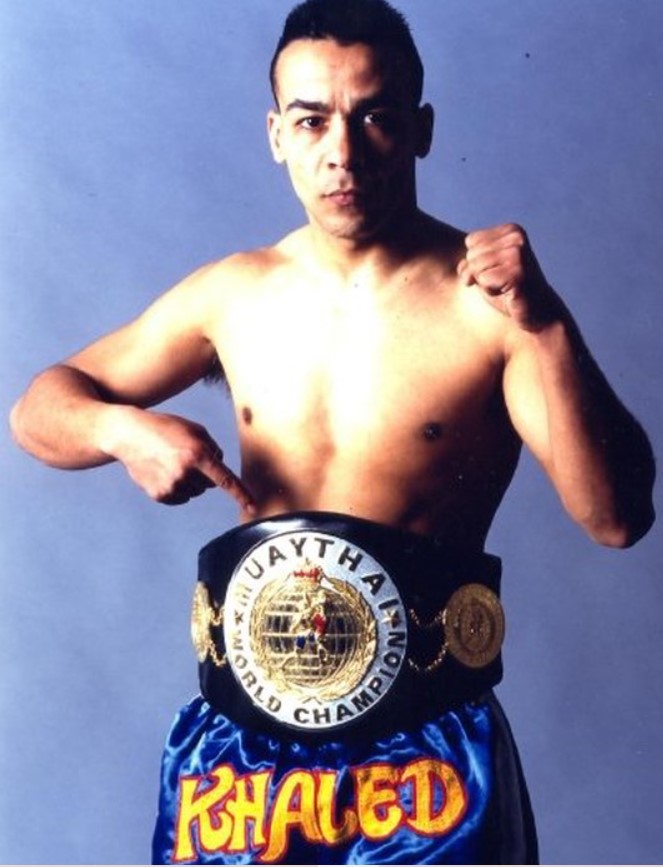
I had a cut on my face in Bangkok during a fight organized for the King’s birthday. I think I needed four stitches.
Another time, it happened to me in Japan against the champion Tatechima. I also had a cut in Hong Kong during a world championship.
In the first round, I was surprised by a flying elbow to the head that I absolutely wasn’t expecting. The result: four stitches, but I still managed to win the fight on points!
Farid Villaume (WMTC, WFKB, WAKO, MTA World Champion). Farid Villaume is one of the great champions who marked the 2000s; he defeated several Thai legends such as Orono, Saimai, Sakmongkol, Nungtrakan, Samkor, and Wanlop!
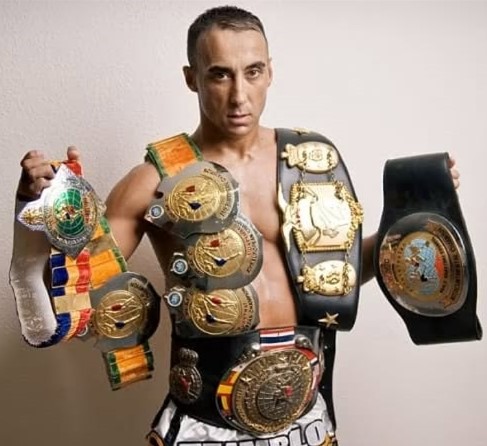
In total, I needed 15 stitches.
The most significant, in one fight, was 6 stitches above my eyebrow.
For both eyebrows, I had 6 stitches, plus another 6 stitches, and under my eyelid I had 3 stitches.
Jaid Seddak (World Champion, European Champion). Jaid Seddak, nicknamed “Little Big Man,” was one of the best foreign fighters in his weight class during the 80s and 90s. He was the first foreigner to face Thai stars Hippy Singmanee and Rambo Pongsiree. In 73 fights, he was never knocked out!
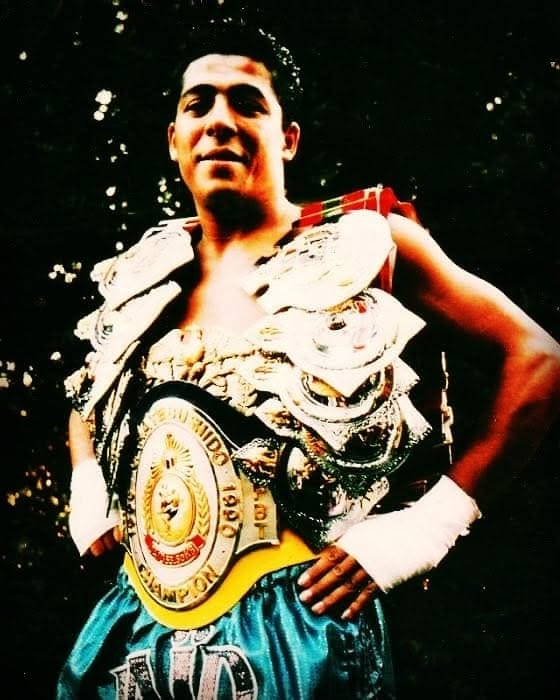
I only ever had one cut, from an elbow strike, which required four stitches. It was against a Thai fighter, but I can’t remember his name, and it didn’t last long; the rest of the match went well.
And I’ve never been knocked out or suffered any serious injury in my entire career, across all the disciplines I’ve fought in: Muay Thai, Kickboxing, Savate (French Boxing), Full Contact, and English Boxing!
Because I was lucky enough to train with all the greatest Thai champions of the time: Chamophet, Dieselnoi, Samart, Kongtoranee, Cherry, Hippy, Rambo, Karuhat, Langsuan, and Wangchanoi!
Aurélien Duarte (World Champion, European Champion). Aurélien Duarte is one of the great champions of the 90s and 2000s, with seven world titles won in several disciplines including Muay Thai, Kickboxing, and Shidokan Karate.
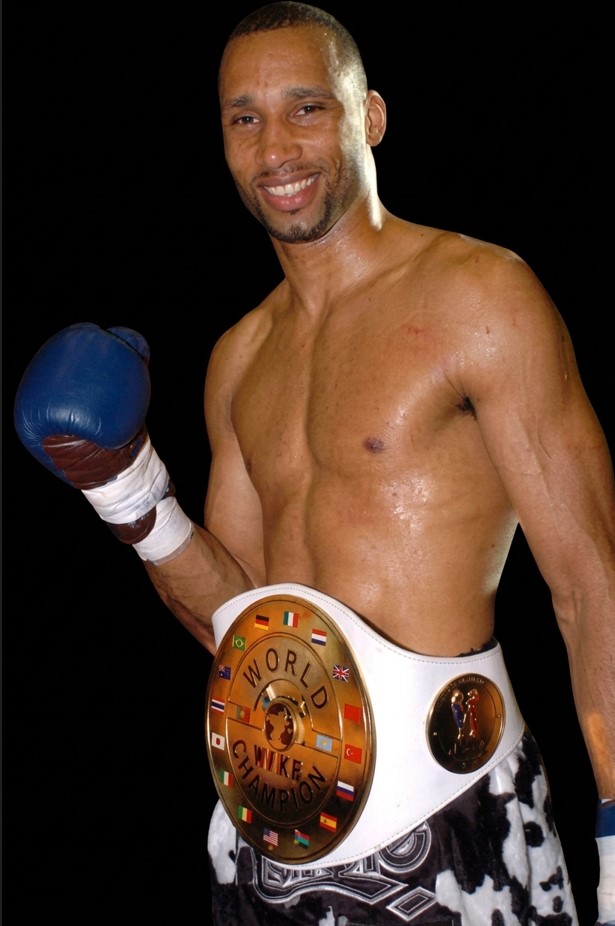
I didn’t fight extensively using elbow strikes, only about ten fights out of 120. But I can proudly say that I’ve never had a cut during a fight, not even a stitch in the ring.
And the only time I got a cut above my eye was when I was lowering a basketball backboard with a crank that came off its axis and hit my eyebrow (Laughs).
Rachid El Herdmi (World Champion, European Champion). Rachid El Herdmi is one of the best fighters in his weight class during the golden age of Muay Thai in France (1980s/1990s).
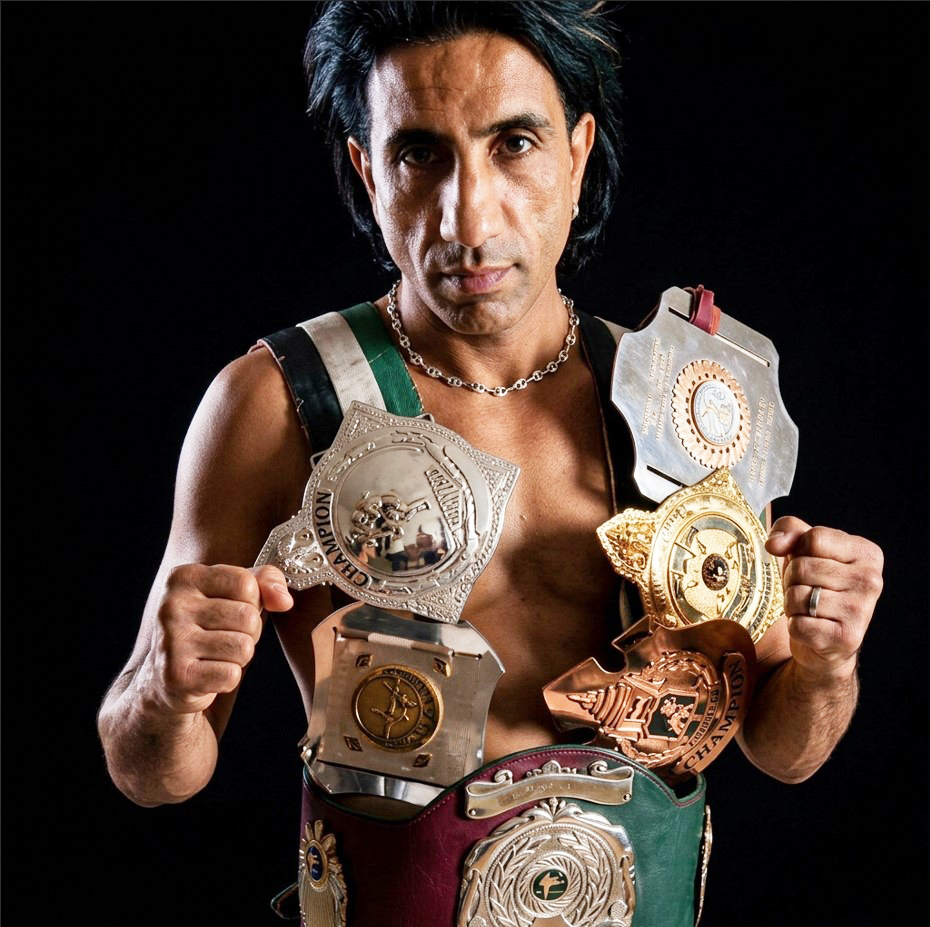
I never needed a single stitch during my career, I was never injured in the head, only in the legs. Even my broken nose was from a car accident (Laughs).
I never had any serious injuries. I had an intelligent style of boxing; I didn’t go to war. I boxed according to my opponent, dodging, countering, I did everything to destabilize him.